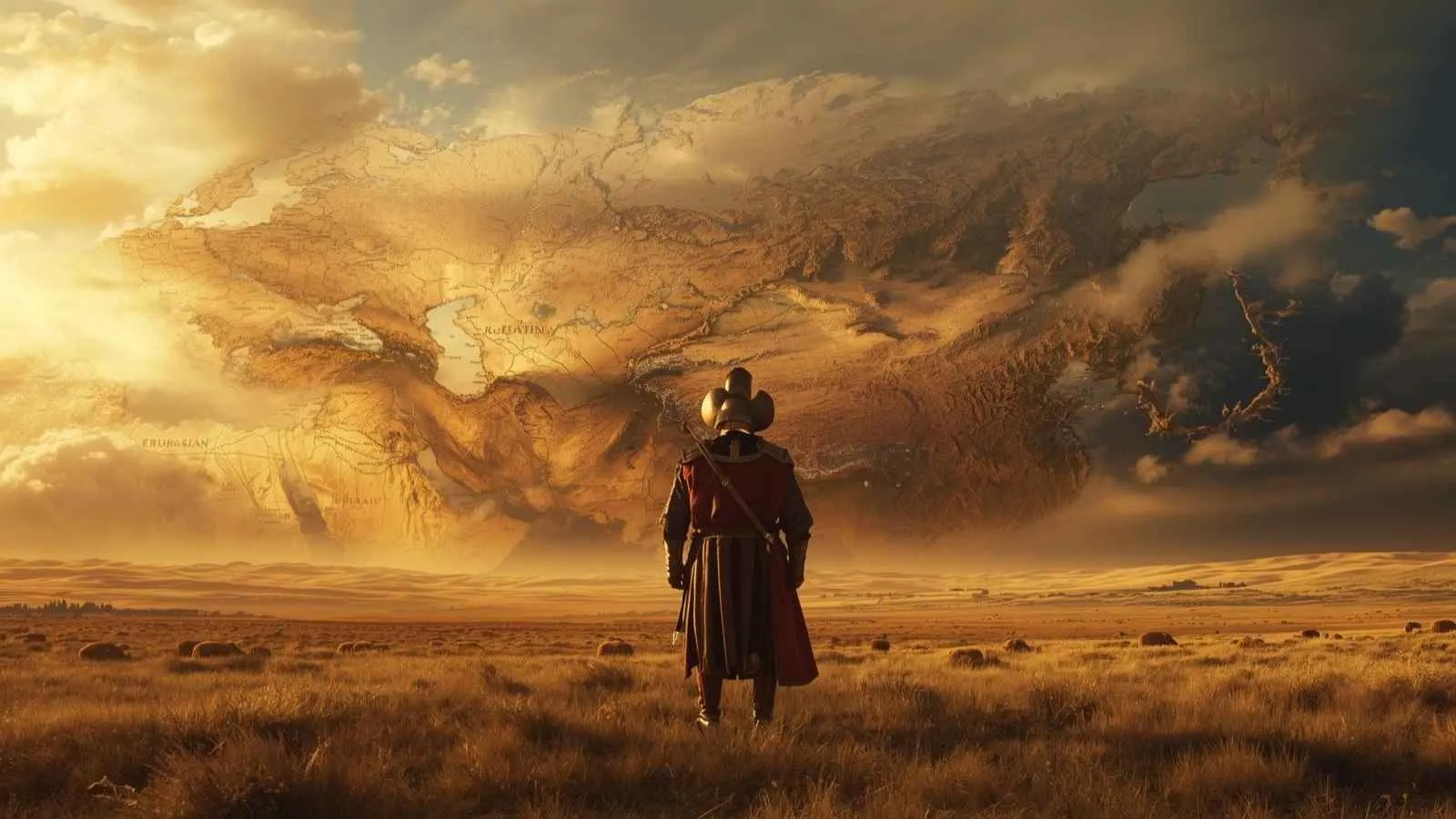
When people search for Genghis Khan net worth, they’re often surprised to see his name ranked above modern billionaires like Elon Musk and Jeff Bezos.
How could a 13th-century nomadic ruler who lived without banks, stock markets, or modern currency be considered the richest person in history? The answer lies not in cash or personal possessions, but in unprecedented economic power.
Genghis Khan founded the Mongol Empire, the largest contiguous empire the world has ever seen, stretching from East Asia to Eastern Europe.
Through conquest, trade control, and tribute systems, he commanded vast lands, resources, and wealth-producing economies. Historians estimate that, when adjusted to today’s value, the economic influence of his empire could exceed $100 trillion.
However, calculating Genghis Khan’s net worth isn’t straightforward. Unlike modern billionaires, he did not hoard wealth for personal luxury.
Instead, his fortune was measured in control, influence, and access to global resources making him a unique case in the history of wealth.
Who Was Genghis Khan? (Historical Background)
Genghis Khan, born Temujin around 1162, rose from extreme hardship to become one of the most influential figures in world history. His early life was marked by poverty, betrayal, and survival after his father, a Mongol chieftain, was poisoned by rival tribes. Cast out with his family, Temujin learned resilience, leadership, and the importance of loyalty—traits that would later define his rule.
By his early adulthood, Temujin began uniting the fragmented Mongol tribes of the Central Asian steppe. Unlike traditional rulers who relied on noble lineage, he promoted individuals based on merit, loyalty, and military skill, a revolutionary concept at the time. In 1206, after successfully unifying the Mongols, he was given the title Genghis Khan, meaning “Universal Ruler.”
Under his leadership, the Mongol Empire expanded at an unprecedented pace. His armies conquered vast territories across China, Central Asia, the Middle East, and parts of Eastern Europe. These conquests were not only military achievements but also economic transformations. Genghis Khan established laws, improved communication systems, and protected trade routes, laying the groundwork for what historians later called the Pax Mongolica—a period of relative stability and economic growth across Eurasia.
Understanding who Genghis Khan was is essential when discussing Genghis Khan net worth. He was not merely a conqueror obsessed with gold or luxury. Instead, he was a strategist and empire-builder whose power came from control over land, people, and economic systems. His influence reshaped global trade, governance, and wealth distribution in ways that continue to be felt centuries later.
What Does “Net Worth” Mean for Ancient Rulers?
Before estimating Genghis Khan net worth, it’s important to understand why the concept of net worth works very differently for ancient rulers than it does today. In the modern world, net worth is calculated by adding up assets such as cash, investments, property, and businesses, then subtracting liabilities. For 13th-century leaders, none of these financial systems existed in a recognizable form.
Ancient rulers did not have personal bank accounts, corporate shares, or real estate portfolios. Instead, wealth was measured by control—control over land, labor, resources, trade routes, and production. Power and wealth were inseparable, and economic influence often mattered more than personal ownership. A ruler who commanded fertile farmland, mines, cities, and trade corridors effectively controlled enormous wealth, even if it wasn’t personally stored as gold or silver.
Because of this, historians estimate historical wealth using GDP-equivalent models. This approach examines how much of the world’s economic output a ruler controlled at their peak. In Genghis Khan’s case, the Mongol Empire governed vast regions that produced agricultural goods, metals, textiles, and trade revenue across Eurasia. This method explains why his estimated wealth appears astronomically high when converted into today’s dollars.
However, it’s crucial to distinguish between imperial wealth and personal fortune. Genghis Khan did not legally “own” everything within his empire in the modern sense, nor could he freely liquidate its assets. His wealth existed as authority, access, and command rather than private accumulation. This distinction is why historical net worth figures should be viewed as comparative estimates, not literal bank balances, and why Genghis Khan remains such a unique case in discussions of wealth throughout history.
How Did Genghis Khan Accumulate His Wealth?
Genghis Khan accumulated wealth not through inheritance or commerce, but through a powerful combination of conquest, administration, and economic control. As the Mongol Empire expanded, it absorbed some of the most productive regions in the world, including agricultural centers, trade cities, and resource-rich territories. Each conquest added land, labor, and revenue to the empire’s growing economic base.
One of the primary sources of wealth was territorial control. At its peak, the Mongol Empire covered approximately 22 percent of the Earth’s land surface. This vast domain included farmland, mines, workshops, and urban centers that generated continuous economic output. Rather than destroying these assets, Genghis Khan often preserved skilled workers and administrators, ensuring long-term productivity.
Another major contributor was tribute and taxation. Conquered cities and kingdoms were required to pay regular tribute in the form of gold, silver, livestock, textiles, and food supplies. This system created a steady flow of wealth without the need for constant warfare. In addition, populations under Mongol rule paid taxes that funded military campaigns and governance.
Perhaps the most strategic source of wealth came from control of the Silk Road. By securing and protecting key trade routes between East Asia, the Middle East, and Europe, Genghis Khan enabled safer and faster trade. Merchants were taxed, but also protected, which encouraged higher trade volume and greater economic returns.
Unlike many rulers, Genghis Khan redistributed much of this wealth among his generals and soldiers. This policy strengthened loyalty and efficiency, allowing the empire—and its wealth—to continue expanding at an unmatched pace. Up next: The Economic Power of the Mongol Empire.
The Economic Power of the Mongol Empire
The true scale of Genghis Khan net worth becomes clearer when examining the overall economic power of the Mongol Empire. Rather than functioning as a loose collection of conquered lands, the empire operated as an interconnected economic system that spanned much of Eurasia. Under Genghis Khan’s leadership, trade, production, and communication were streamlined on a scale never seen before.
A key factor was the establishment of the Pax Mongolica, a period of relative peace and stability across vast trade routes. Roads were secured, banditry was harshly punished, and merchants were granted protection and incentives to travel freely. This stability allowed goods, ideas, and technologies to move efficiently between East and West, dramatically increasing trade volume and economic output.
The empire controlled regions rich in agriculture, mining, and manufacturing. Fertile lands in China and Central Asia produced food surpluses, while mines yielded precious metals such as gold and silver. Cities under Mongol rule became hubs for textiles, weapons, ceramics, and other high-value goods. By integrating these regions into a single system, the Mongols maximized productivity rather than extracting short-term gains.
Historians estimate that at its height, the Mongol Empire governed a significant share of the world’s population and economic activity. When modern economists compare this level of control to today’s global economy, it results in estimates exceeding $100 trillion in modern value. This figure reflects influence over production and trade, not personal cash reserves.
This immense economic dominance explains why Genghis Khan is often ranked above all other historical figures in discussions of wealth. Next, we’ll examine an important question: Did Genghis Khan personally own this wealth?
Did Genghis Khan Personally Own All This Wealth?
Despite the enormous economic power of the Mongol Empire, Genghis Khan did not personally own its wealth in the way modern billionaires own assets. His authority gave him control and access, but ownership was collective, political, and military rather than private. This distinction is crucial to understanding why his net worth is often misunderstood.
Genghis Khan followed a system rooted in meritocracy and shared rewards. Wealth acquired through conquest—such as gold, silver, livestock, and goods—was distributed among generals, soldiers, and allied families based on loyalty and performance. This practice ensured unity, minimized rebellion, and motivated continued expansion. Hoarding wealth for personal luxury was discouraged and seen as counterproductive to empire-building.
Unlike many emperors and kings, Genghis Khan lived a relatively modest and mobile lifestyle. He did not construct lavish palaces or amass vast personal treasures. As a steppe leader, his power depended on mobility, discipline, and loyalty rather than display. Even his burial site remains unknown, reflecting Mongol traditions that rejected excess and glorification.
Administratively, wealth generated across the empire was managed through officials and local leaders rather than funneled into a single royal treasury for personal use. Taxes and tribute were reinvested into military campaigns, infrastructure, and governance. This reinvestment helped sustain economic growth and territorial control.
Therefore, when historians assign an enormous figure to Genghis Khan net worth, they are measuring his command over resources and economies—not a personal fortune he could spend freely. His “wealth” was power itself. Next, we’ll explore how historians estimate his net worth in today’s dollars and why those numbers vary so widely.
Estimated Genghis Khan Net Worth in Today’s Dollars
Estimating Genghis Khan net worth in today’s dollars is a complex task that relies on historical analysis rather than financial records. Since there are no balance sheets or personal accounts from the 13th century, historians and economists use comparative models to approximate his economic power in modern terms. The most common method compares the share of global wealth or economic output controlled by a ruler at their peak.
At its height, the Mongol Empire governed vast regions across Asia, the Middle East, and parts of Europe. These territories included major population centers, fertile agricultural land, and key trade routes. When economists translate this level of control into modern GDP equivalents, estimates for Genghis Khan’s net worth often range between $100 trillion and $120 trillion. This figure reflects the immense economic influence of the empire rather than liquid personal assets.
However, these estimates are widely debated. Critics argue that empire-wide wealth should not be attributed to a single individual, especially when resources were distributed and reinvested rather than privately owned. Others counter that absolute authority over such a large portion of the world’s economy justifies the comparison, even if it doesn’t align with modern definitions of ownership.
It’s also important to note that Genghis Khan’s wealth was not static. It grew rapidly as the empire expanded and fluctuated with military campaigns and administrative changes. Unlike modern billionaires whose wealth is tied to markets, his “net worth” was directly connected to territorial control and political stability.
Ultimately, the massive figures associated with Genghis Khan are best understood as symbolic indicators of economic dominance, not literal cash values. Next, we’ll compare Genghis Khan’s wealth to modern billionaires and other historical figures to put these numbers into perspective.
Genghis Khan vs Modern Billionaires
When comparing Genghis Khan net worth to modern billionaires, the differences go far beyond the numbers. Today’s richest individuals—such as Elon Musk, Jeff Bezos, and Bernard Arnault—derive their wealth from company ownership, stock valuations, and global markets. Their fortunes fluctuate daily and are tied to specific businesses. Genghis Khan’s wealth, by contrast, was rooted in absolute authority over land, people, and economic systems.
Modern billionaires are extraordinarily wealthy, but even the richest among them control only a tiny fraction of global economic output. At his peak, Genghis Khan ruled over territories that accounted for a significant share of the world’s population and productive capacity. This is why, when economists attempt historical comparisons, his estimated wealth dwarfs that of any modern individual—even when adjusted for inflation.
Another major difference lies in liquidity and ownership. Elon Musk cannot command armies or seize resources, and Genghis Khan could not sell shares or accumulate passive income. Their wealth existed in entirely different systems. Modern billionaires operate within legal and financial constraints, while Genghis Khan’s wealth was enforced through military and political power.
There is also a contrast in personal consumption. Many modern billionaires own luxury properties, yachts, and private jets. Genghis Khan, however, maintained a relatively simple lifestyle consistent with Mongol traditions. His power was expressed through loyalty, discipline, and expansion rather than material excess.
Ultimately, comparing Genghis Khan to modern billionaires highlights the limits of traditional net worth calculations. While today’s wealthy individuals dominate industries, Genghis Khan dominated entire economies. Next, we’ll explore how he compares to other historical figures, such as Augustus Caesar and John D. Rockefeller, in the race for the title of the richest person in history.
Genghis Khan vs Other Historical Figures
When discussing Genghis Khan net worth, he is often compared not only to modern billionaires but also to other legendary figures from history. Two of the most frequently mentioned are Augustus Caesar, the first emperor of Rome, and John D. Rockefeller, America’s first billionaire. Each controlled immense wealth, but the nature of their fortunes differed significantly.
Augustus Caesar ruled over the Roman Empire at a time when Rome dominated much of the known world. Historians estimate that he controlled nearly 25 to 30 percent of the global economy during his reign. Like Genghis Khan, his wealth was tied to imperial authority rather than personal savings. However, Rome had a more centralized administrative and monetary system, making Augustus’s wealth easier to define within its historical context.
John D. Rockefeller, on the other hand, amassed wealth through private enterprise. At his peak, his fortune accounted for nearly 2 percent of the U.S. economy. When adjusted for inflation, Rockefeller is often cited as one of the richest individuals in modern history. Unlike ancient rulers, his wealth was legally owned, transferable, and measurable.
What sets Genghis Khan apart is the scale and structure of control. His empire was geographically larger than Rome’s and more economically diverse. While he may not have controlled as large a percentage of the global economy as Augustus Caesar, the Mongol Empire’s sheer reach across Eurasia gave him unmatched influence over trade and resources.
These comparisons show why there is no single answer to who was the richest person in history. Each figure represents a different model of wealth—imperial, industrial, or entrepreneurial. Next, we’ll address common myths and misconceptions surrounding Genghis Khan’s wealth and lifestyle.
Myths and Misconceptions About Genghis Khan’s Wealth
The immense figures often attached to Genghis Khan net worth have led to many myths and misunderstandings. One of the most common misconceptions is that Genghis Khan personally possessed vast vaults of gold and treasure. In reality, there is no historical evidence that he hoarded wealth or lived in extravagant luxury. Mongol culture valued mobility and discipline, and excess personal riches were seen as unnecessary and even dangerous to unity.
Another widespread myth is that Genghis Khan ruled purely through destruction and plunder. While his conquests were undeniably brutal, they were also highly strategic. Cities that surrendered were often spared, and skilled artisans, engineers, and administrators were preserved to support long-term economic productivity. This approach contradicts the idea that his wealth came solely from short-term looting.
Some believe that the enormous net worth estimates mean Genghis Khan was “richer” than everyone who came after him in a literal sense. This interpretation misunderstands how historical wealth is calculated. The often-cited $100 trillion figure represents economic influence, not personal spending power. He could not liquidate the empire or convert its resources into personal assets.
There is also a misconception that Genghis Khan lacked an economic vision. In fact, he implemented legal codes, standardized practices, and protected trade routes, all of which strengthened economic stability. His policies encouraged commerce across continents, benefiting merchants and cities under Mongol rule.
Understanding these myths is essential for an accurate view of Genghis Khan’s wealth. In the final section, we’ll deliver a clear verdict on how rich Genghis Khan really was and what his net worth truly represents.
Final Verdict: How Rich Was Genghis Khan Really?
So, how rich was Genghis Khan really? The answer depends entirely on how wealth is defined. If net worth is measured by personal cash, luxury possessions, or private ownership, then Genghis Khan would not rank among the richest individuals by modern standards.
He did not live in palaces, accumulate personal treasure, or leave behind a measurable fortune in gold or property. However, if wealth is defined as economic control, influence, and access to resources, then his position in history is virtually unmatched.
At the height of his power, Genghis Khan commanded the largest contiguous empire the world has ever known. He controlled vast territories that produced food, metals, textiles, and trade revenue across Eurasia. Through conquest, taxation, and dominance of the Silk Road, he exercised authority over a significant portion of the global economy.
When historians translate this level of influence into modern terms, it results in estimates exceeding $100 trillion, making him arguably the most economically powerful individual in history.
Yet, it is important to view these figures as conceptual comparisons, not literal bank balances. Genghis Khan’s “net worth” existed in his ability to mobilize armies, direct trade, and command loyalty not in money he could personally spend.
His wealth was collective, strategic, and constantly reinvested into expanding and stabilizing the empire.
Ultimately, Genghis Khan stands apart because his power reshaped global history. While modern billionaires dominate industries, he dominated continents. His legacy proves that true wealth, especially in the ancient world, was measured not by accumulation, but by control and by that standard, few figures in history come close.
Frequently Asked Questions (FAQs)
How much was Genghis Khan worth?
Genghis Khan did not have a personal net worth in the modern sense. However, historians estimate that the economic influence of the Mongol Empire at its peak could equal $100–$120 trillion in today’s dollars, based on GDP-equivalent comparisons.
Was Genghis Khan the richest person in history?
By measures of economic control and influence, Genghis Khan is often considered the richest or most powerful individual in history. This ranking is based on the size of the empire he controlled, not personal wealth or cash holdings.
How did Genghis Khan make his money?
His wealth came from conquest, tribute, taxation, and control of trade routes, especially the Silk Road. These systems generated continuous economic output across his empire.
Did Genghis Khan have gold and treasure?
Yes, the Mongol Empire possessed gold, silver, and valuable goods, but Genghis Khan did not hoard treasure for personal luxury. Wealth was redistributed among soldiers and leaders to maintain loyalty and efficiency.
Why is Genghis Khan’s net worth so hard to calculate?
Because modern financial systems did not exist in the 13th century. His wealth is estimated using historical economic models that measure control over land, resources, and production, not personal assets.
Was Genghis Khan richer than Elon Musk or Jeff Bezos?
In relative terms, yes. While modern billionaires own companies worth hundreds of billions, Genghis Khan controlled a much larger share of the world’s economy during his lifetime.
Did Genghis Khan personally own the Mongol Empire?
No. He ruled it with absolute authority, but wealth was communal and administrative. His “net worth” reflects power and control, not legal ownership.