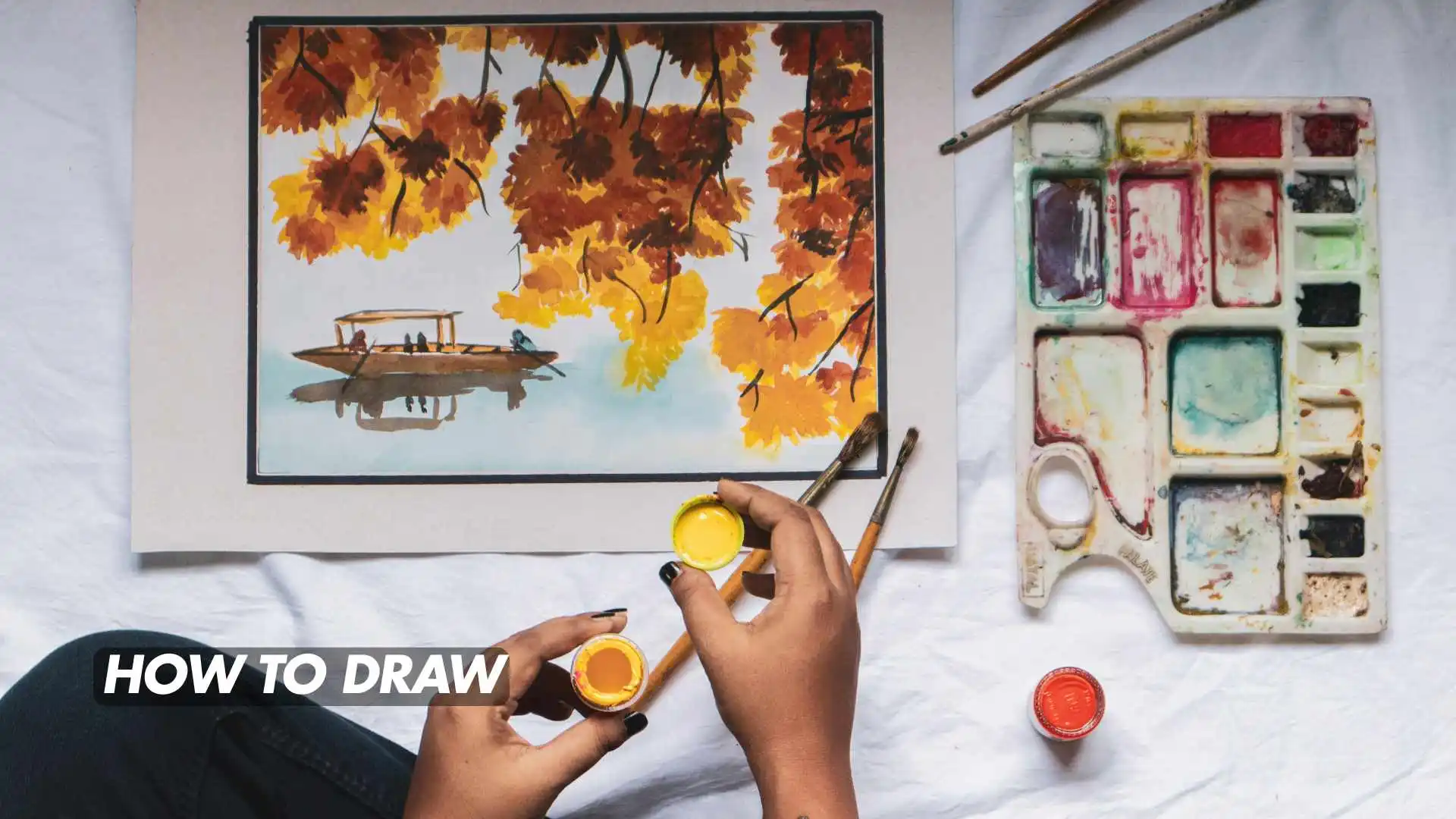
Have you ever looked at a sketch and thought, “I wish I could draw like that”? The good news is—you absolutely can. Drawing isn’t about being born with talent; it’s about learning how to see, observe, and practice. Whether you want to sketch your favorite characters, design art for social media, or just relax with a pencil and paper, this step-by-step guide will show you how to draw from scratch.
In this article, we’ll explore:
- The best tools for beginners
- Simple drawing techniques that actually work
- How to train your eyes and hands to draw accurately
- Common mistakes to avoid
- Tips to improve faster
By the end, you’ll understand how to draw anything—from basic shapes to realistic portraits—confidently and creatively.
✏️ What You Need to Start Drawing
Before diving into techniques, let’s make sure you have the right materials. You don’t need expensive tools to start learning how to draw; just a few essentials.
🧰 Basic Drawing Tools for Beginners
- Pencils: Start with HB, 2B, and 4B.
- Eraser: A kneaded eraser is perfect for clean corrections.
- Sharpener: Keep your pencils ready for detail work.
- Paper: Use smooth sketching paper or a simple notebook.
- Ruler and Compass: For drawing straight lines and circles.
💡 Tip: If you’re learning digitally, free apps like IbisPaint, Krita, or Autodesk SketchBook are great for beginners.
🔹 Step 1: Learn to See Like an Artist
The biggest secret in learning how to draw is learning how to see. Drawing is not copying what you think something looks like—it’s observing how it really looks.
👁️ Practice Observational Drawing
- Place a simple object (like a cup) in front of you.
- Observe the shape, edges, shadows, and reflections.
- Try to sketch it as accurately as possible.
👉 This trains your eyes to notice proportions and light, which is the foundation of all drawing.
🔹 Step 2: Master the Basic Shapes
Everything you draw is made up of basic shapes—circles, squares, triangles, and ovals.
✍️ Why Basic Shapes Matter
When you look at a complex object, try to break it down into simple shapes. For example:
- A face = oval + lines + circles
- A car = rectangles + trapezoids + curves
- A tree = cylinder (trunk) + cloud shapes (leaves)
This simple method helps you draw anything easily.
💡 Exercise: Pick an object and draw it using only simple shapes. Then refine it by adding details.
🔹 Step 3: Practice Line Control and Shading
Once you understand shapes, focus on your line quality and shading.
✏️ Line Practice
Try these exercises daily:
- Draw straight lines without a ruler.
- Create circles, ellipses, and wavy lines.
- Practice light and heavy strokes to control pressure.
🌗 Shading Basics
Shading gives your drawing depth and realism.
- Identify the light source.
- Darken areas that are far from the light.
- Blend tones smoothly for shadows.
🔹 Step 4: Learn Proportions and Anatomy
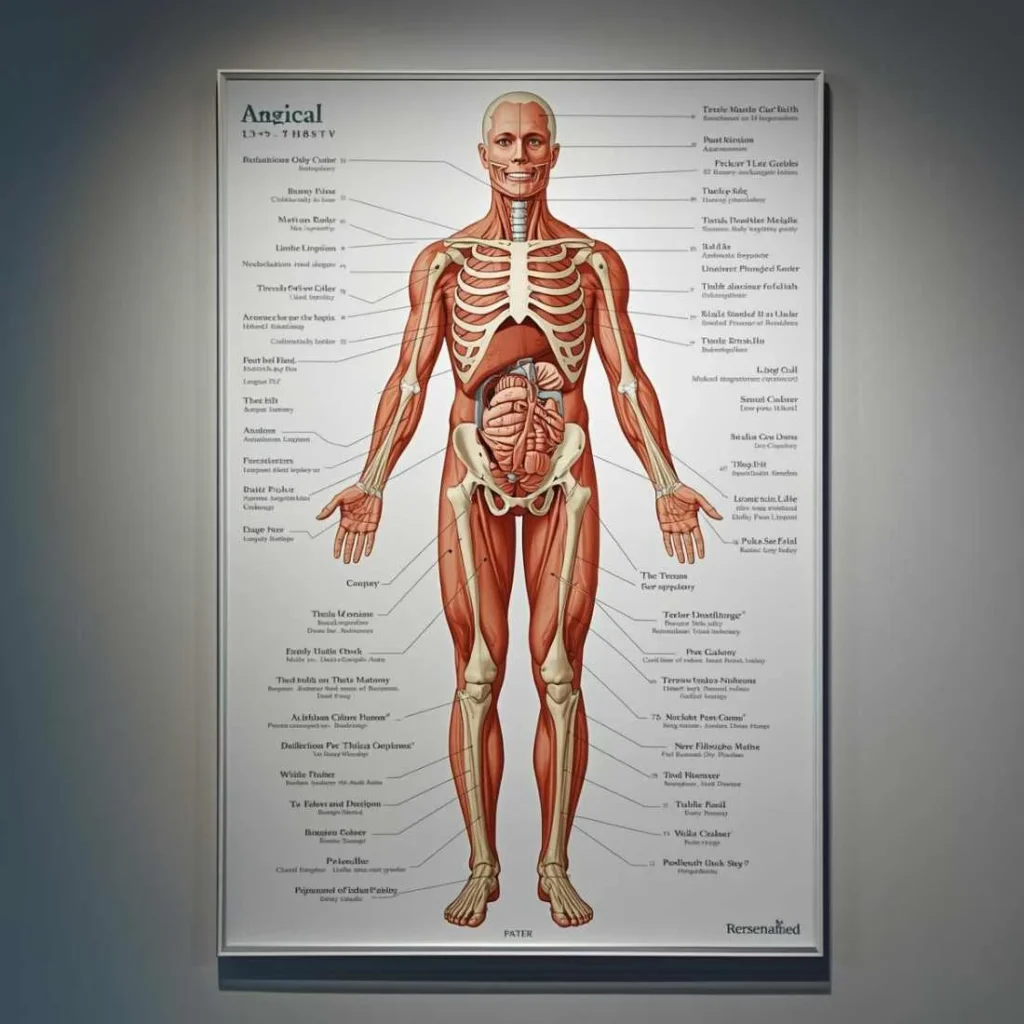
Drawing people, animals, or objects accurately requires understanding proportions.
🧍 Human Proportions
- The body is about 7.5 heads tall.
- Eyes sit halfway down the head.
- The arms reach mid-thigh.
Use light construction lines before detailing features.
🐾 Animal Drawing Basics
Animals follow similar proportional logic—use circles and lines to map the skeleton before adding fur, muscles, and details.
💡 Tip: Don’t aim for perfection. Focus on understanding structure, not just copying outlines.
🔹 Step 5: Add Light, Shadow, and Texture
When learning how to draw realistically, mastering light and texture separates flat drawings from lifelike art.
💡 Understanding Light Sources
Every object has:
- Highlights: Bright spots hit directly by light
- Mid-tones: Normal surface areas
- Shadows: Dark zones opposite the light source
Experiment with one lamp and draw a simple object under it from different angles.
🌿 Texture Techniques
Different textures need unique strokes:
- Hair: short, quick lines
- Fabric: smooth cross-hatching
- Wood: long grainy lines
🔹 Step 6: Start Drawing from Real Life
To improve fast, draw from observation daily.
🪞 Practice Ideas
- Your own hand or face in the mirror
- Coffee mugs, plants, shoes
- Street scenes or pets
Drawing from life sharpens your observation and makes your art more natural.
💬 Try This Now: Sketch something near you for 10 minutes without erasing. You’ll notice huge improvement after a week!
🔹 Step 7: Explore Different Drawing Styles
Experimentation helps you find your artistic voice.
✨ Popular Drawing Styles
- Realistic Drawing: Focuses on accuracy and details.
- Cartoon Style: Simplified and exaggerated features.
- Anime/Manga: Big eyes, dynamic poses, and clean lines.
- Abstract Art: Expressive forms and creative freedom.
🔹 Step 8: Develop a Daily Drawing Routine
Consistency beats perfection. Every great artist improves by practicing regularly.
🕒 Create a Simple Routine
- Draw for at least 15–30 minutes daily.
- Choose one skill per day (shading, anatomy, perspective).
- Keep a sketchbook to track progress.
💡 Motivation tip: Look back at old sketches every month—you’ll be amazed at your growth!
🔹 Step 9: Learn from Other Artists
You can learn faster by studying professionals.
📚 How to Learn Effectively
- Watch YouTube tutorials and pause to practice each step.
- Copy master sketches (for study purposes only).
- Join art communities on Reddit or Discord for feedback.
🔹 Step 10: Use Digital Tools and References
Modern artists often blend traditional and digital skills.
💻 Digital Drawing Tips
- Use layers for easy correction.
- Try tablet shortcuts to speed up your workflow.
- Practice sketching digitally every few days.
Popular free tools: Krita, IbisPaint, Clip Studio Paint (trial), Procreate Pocket.
🔹 Step 11: Common Mistakes Beginners Make
Avoid these early errors to save time and frustration:
- Pressing too hard on the pencil – makes erasing difficult.
- Skipping the basic shapes – causes wrong proportions.
- Avoiding light guidelines – makes drawings messy.
- Not using references – leads to unnatural poses.
- Comparing yourself to professionals – kills motivation.
🎯 Remember: Every artist started as a beginner. Progress is built on patience and practice.
💬 Realistic Drawing Practice Ideas
- Draw your favorite movie character.
- Sketch your hand in 3 different poses.
- Try a “30-day drawing challenge.”
- Re-draw an old sketch and compare results.
💬 Quick Recap
Learning how to draw involves:
- Observing shapes and proportions
- Practicing daily line control and shading
- Understanding light and form
- Drawing from real life and references
- Staying consistent and curious
You don’t need perfection—you need progress.
🧠 Expert Tips to Improve Your Drawings Faster
- Use the grid method for proportion accuracy.
- Study values, not just outlines.
- Rotate your paper for smoother curves.
- Take breaks to refresh your eyes.
- Join an online drawing challenge for motivation.
🔎 Frequently Asked Questions (FAQ)
❓ 1. How can I start drawing as a complete beginner?
Start by practicing basic shapes, lines, and shading. Don’t focus on perfection—focus on consistency.
❓ 2. Which pencil is best for beginners?
Start with HB for outlines, 2B for shading, and 4B for darker areas.
❓ 3. How long does it take to learn how to draw?
It depends on practice time. With daily effort, you can see big improvements within 2–3 months.
❓ 4. Should I learn digital or traditional drawing first?
Start with traditional drawing to understand form and light. Then move to digital tools—it’ll be easier.
❓ 5. Can I learn how to draw without talent?
Absolutely! Drawing is a learned skill—anyone can improve with patience and the right techniques.
🚀 Final Words: Keep Creating, Keep Growing
Drawing isn’t just a hobby—it’s a journey of observation, patience, and self-expression. You don’t have to be perfect; you just have to start.
Each line you draw brings you closer to the artist you want to become. So grab your pencil, pick a subject, and draw today.