Fruit flies might be tiny, but they are a major nuisance in any kitchen. These persistent kitchen pests swarm around fruits, vegetables, garbage, and even drains. If left unchecked, a single fruit fly can lead to a full-blown fruit fly infestation in just days. The good news? You can get rid of fruit flies naturally, effectively, and prevent them from returning with the right strategies.
In this comprehensive guide, you’ll learn everything about fruit fly prevention, fruit fly remedies, DIY fruit fly traps, and advanced tips to maintain a pest-free kitchen.
What Are Fruit Flies?
Fruit flies, scientifically known as Drosophila melanogaster, are tiny insects, about 1/8 inch long, with red or brown eyes and tan bodies. Despite their size, they multiply rapidly and thrive in fermenting fruits, vegetables, and sugary liquids.
Key traits of fruit flies:
- Red or brown eyes, tiny tan bodies
- Attracted to ripening or rotting produce
- Reproduce extremely quickly, laying hundreds of eggs in a week
- Thrive in moist, organic areas like drains and trash
Understanding these traits is the first step in fruit fly control.
Why Fruit Flies Are a Problem
Fruit flies are not just annoying—they pose real problems for your home:
- Food contamination: They carry bacteria from decaying food to fresh produce.
- Faster spoilage: Eggs laid on fruits and vegetables can ruin them.
- Rapid multiplication: One fruit fly can become dozens in days.
- Kitchen pest presence: They infest garbage, compost, and drains, creating hygiene issues.
Ignoring them can make your kitchen unfit for use, so immediate fruit fly prevention is crucial.
How Fruit Flies Enter Your Home
Fruit flies are expert invaders. They can enter through:
- Open windows or doors
- Grocery bags containing ripe fruits or vegetables
- Trash cans, compost bins, or poorly sealed garbage
- Spilled juices, fermentation areas, or leftover liquids
Since they thrive on fermenting organic matter, even a single forgotten fruit can become a breeding ground. Early fruit fly control is essential.
Step-by-Step Guide: How to Get Rid of Fruit Flies
Eliminating fruit flies requires a combination of source removal, trapping, and prevention. Here’s a detailed step-by-step approach:
Step 1: Identify the Source
Before setting traps, locate where fruit flies are breeding:
- Overripe or rotting fruits and vegetables
- Sticky spills, juice, or soda residues
- Trash or compost piles
- Kitchen drains or garbage disposals
Tip: Inspect under counters and behind appliances—fruit fly infestations often start in hidden areas.
Step 2: Deep Clean Your Kitchen
Cleanliness is the first line of defense against kitchen pests.
- Wipe counters and tables daily
- Wash dishes immediately
- Empty trash bins frequently and clean them
- Scrub drains with a baking soda and vinegar mixture
Pro Tip: Keep your sink and cutting boards dry, as moisture attracts fruit flies.
Step 3: DIY Fruit Fly Traps
Traps are an effective way to reduce adult populations. Here are some proven methods:
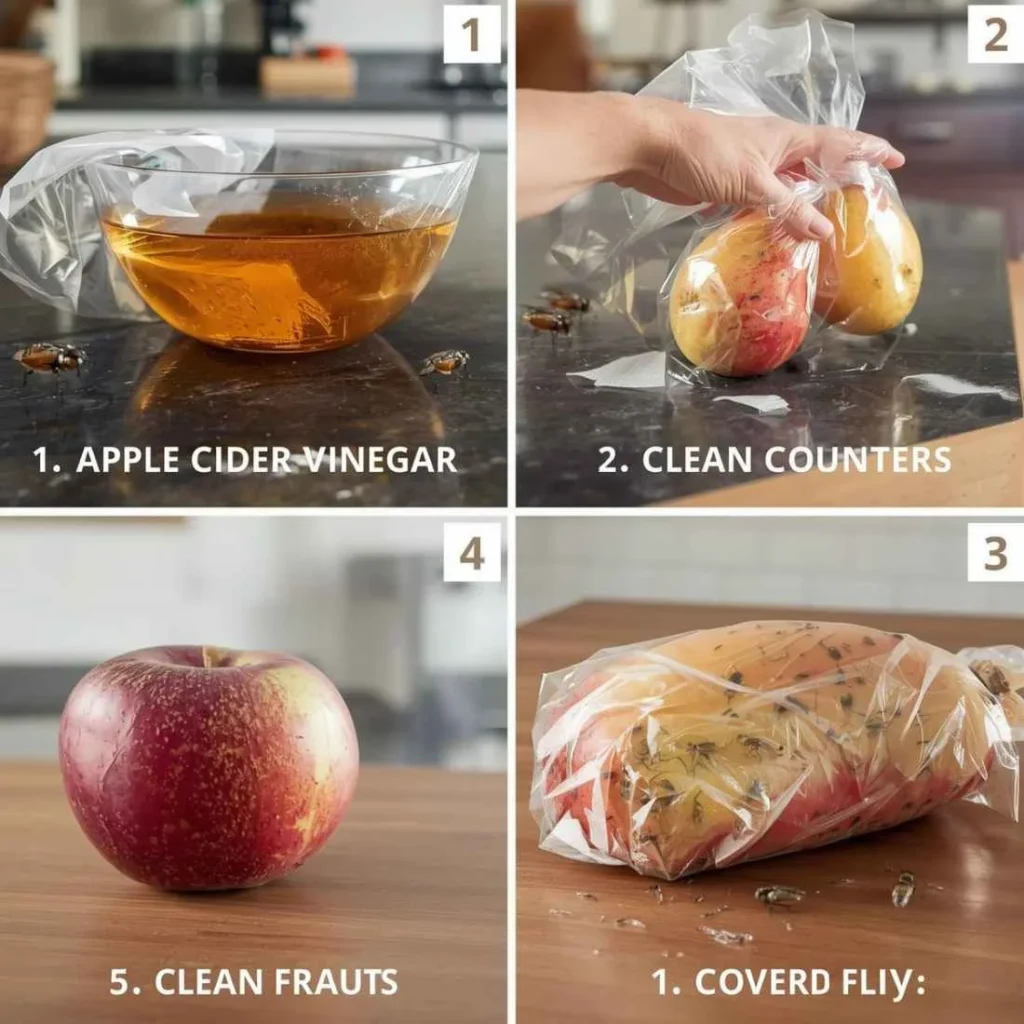
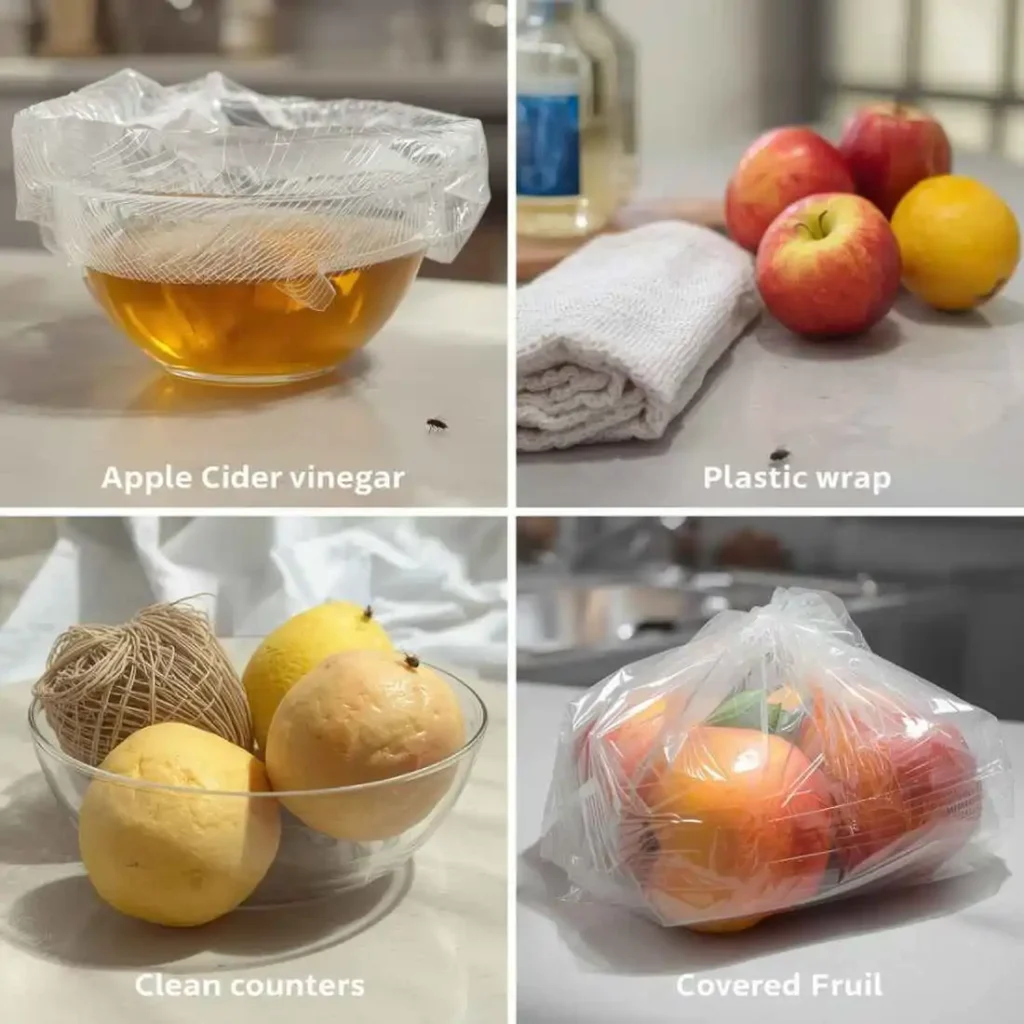
Apple Cider Vinegar Trap
- Fill a small bowl with apple cider vinegar
- Add a drop of dish soap to break surface tension
- Cover with plastic wrap and poke small holes
- Place near fruit bowls or trash bins
This trap attracts flies and prevents them from escaping. Replace every 2–3 days for best results.
Wine or Beer Trap
- Pour leftover wine or beer into a cup
- Add a few drops of dish soap
- Place near the infestation
Fermenting liquids are irresistible to fruit flies, making this a powerful home remedy for fruit flies.
Commercial Fruit Fly Traps
- Available in stores and online
- Often include sticky surfaces or attractants
- Perfect for larger infestations
Pro Tip: Combine traps with kitchen cleaning to prevent new flies from appearing.
Step 4: Eliminate Breeding Grounds
After trapping adults, target eggs and larvae:
- Remove spoiled fruits immediately
- Clean fruit bowls, bins, and recycling areas
- Scrub kitchen drains weekly with baking soda and vinegar
Remember: Even one unnoticed food item can restart a fruit fly infestation.
Step 5: Natural Fruit Fly Remedies
For chemical-free solutions, use these natural fruit fly solutions:
Essential Oils
- Lavender, peppermint, and lemongrass repel fruit flies
- Mix a few drops in water and spray around counters
Herbs
- Fresh basil, mint, or rosemary
- Place small pots near windows or fruit bowls
Lemon and Cloves
- Insert cloves into a halved lemon
- Place on counters as a natural deterrent
Cucumber Slices
- Fruit flies dislike cucumber scent
- Place slices near infested areas
Using multiple natural remedies together increases effectiveness.
Step 6: Chemical Solutions (Optional)
Sometimes infestations require stronger measures:
- Use indoor-safe insect sprays
- Avoid direct contact with food
- Follow all safety instructions
These sprays should be a last resort after fruit fly remedies and traps.
Preventive Measures: Stop Fruit Flies Before They Start
Prevention is the most effective method to keep your kitchen fly-free.
1. Proper Fruit and Vegetable Storage
- Refrigerate ripe produce
- Store cut fruits in airtight containers
2. Waste Management
- Use trash cans with tight lids
- Cover compost bins
- Rinse recyclables before storage
3. Drain Maintenance
- Pour boiling water down drains weekly
- Scrub with baking soda and vinegar to remove residue
4. Kitchen Monitoring
- Inspect produce before buying
- Avoid leaving sugary liquids uncovered
- Seal windows and doors
Tip: Use a checklist for weekly cleaning to maintain fruit fly prevention.
Advanced Fruit Fly Control Tips
- Use sticky traps near windows and trash cans
- Seal cracks and openings in walls or doors
- Avoid overripe fruit exposure; use FIFO (First In, First Out) method
- Educate household members about fruit fly control strategies
These steps ensure long-term protection against kitchen pests.
Fruit Fly Myths Debunked
- “Fruit flies only come from fruit.” They also breed in drains, trash, and fermenting liquids.
- “Killing one fly solves the problem.” Due to rapid reproduction, one fly can turn into dozens.
- “Chemical sprays are necessary.” Traps, natural remedies, and cleanliness can be equally effective.
FAQs About Fruit Flies
Q1: Can fruit flies bite humans?
No, they are harmless to humans but can contaminate food.
Q2: How long do fruit flies live?
Adults live 8–10 days but reproduce rapidly, laying hundreds of eggs.
Q3: Do fruit flies spread disease?
Yes, they can transfer bacteria from decaying food to fresh produce.
Q4: How can I prevent fruit flies naturally?
Store fruits properly, maintain kitchen cleanliness, and use natural fruit fly solutions like herbs and vinegar traps.
Q5: When should I use chemical sprays?
Only if infestations persist despite natural methods and traps.
Quick Tips to Speed Up Fruit Fly Elimination
- Combine fruit fly traps with regular cleaning
- Replace vinegar traps every 2 days
- Focus on drains, compost, and trash bins
- Screen windows and doors to prevent entry
With consistent action, even a severe infestation can be eliminated in a week.
Suggested Visuals & Engagement
- Step-by-step photos of DIY traps
- Diagram of fruit fly life cycle
- Infographic of preventive measures
- Checklist download: “Weekly Fruit Fly Prevention Guide”
Encourage readers to share tips, comment on remedies that worked, or post pictures of their traps.
Conclusion
Getting rid of fruit flies takes persistence, knowledge, and proper hygiene. By combining fruit fly remedies, DIY traps, and preventive practices, you can eliminate infestations and keep your kitchen safe and clean. Remember, early action and regular monitoring are key to long-term fruit fly prevention.
Even tiny steps, like storing fruit properly and wiping counters daily, can make a big difference. Follow this complete guide to get rid of fruit flies naturally and enjoy a pest-free kitchen year-round