Gnats may be small, but they can become a huge nuisance in your home, garden, or workplace. Whether they’re hovering around your houseplants, swarming over fruit, or lingering near drains, learning how to get rid of gnats effectively is key to a pest-free environment.
This guide covers everything from identifying the type of gnat to using DIY traps, natural remedies, chemical treatments, and preventive strategies.
Understanding Gnats: What They Are and Why They’re a Problem
Gnats are tiny flying insects that can infest homes and gardens. The most common types include:
- Fungus Gnats: Found near indoor plants in moist soil. They can damage plant roots over time.
- Fruit Flies: Attracted to ripening or fermenting fruits and sugary liquids.
- Drain Flies: Breed in drains, garbage disposals, and other damp areas.
Identifying the gnat type is essential because each requires a slightly different approach for gnat control.
Why Gnats Are Attracted to Your Home
Gnats thrive in specific environments:
- Moisture: Overwatered houseplants or damp soil attract fungus gnats.
- Food Sources: Fruit flies target fruits, juices, or sugary spills.
- Organic Matter: Decaying food, compost, or plant debris can sustain gnat populations.
- Poor Drain Hygiene: Drain flies thrive in unclean drains or clogged pipes.
Understanding the source helps prevent recurring infestations and makes indoor gnat solutions more effective.
Signs of a Gnat Infestation
Look out for these common signs:
- Small flies hovering around plants, fruit bowls, or trash.
- Visible larvae in plant soil or drains.
- A sweet, musty, or fermenting odor in infested areas.
- Stagnant water or excessive moisture in hidden areas.
Early detection allows quicker fungus gnats removal and prevents larger infestations.
How to Get Rid of Gnats: Step-by-Step Solutions
Here’s a complete guide with proven methods to get rid of gnats indoors and outdoors.
Step 1: Eliminate Breeding Sources
Removing gnat breeding grounds is the first and most crucial step.
- Houseplants: Let the soil dry out between watering. Remove decaying leaves and old soil on the surface.
- Fruit: Store fruits and vegetables in sealed containers or refrigerate them.
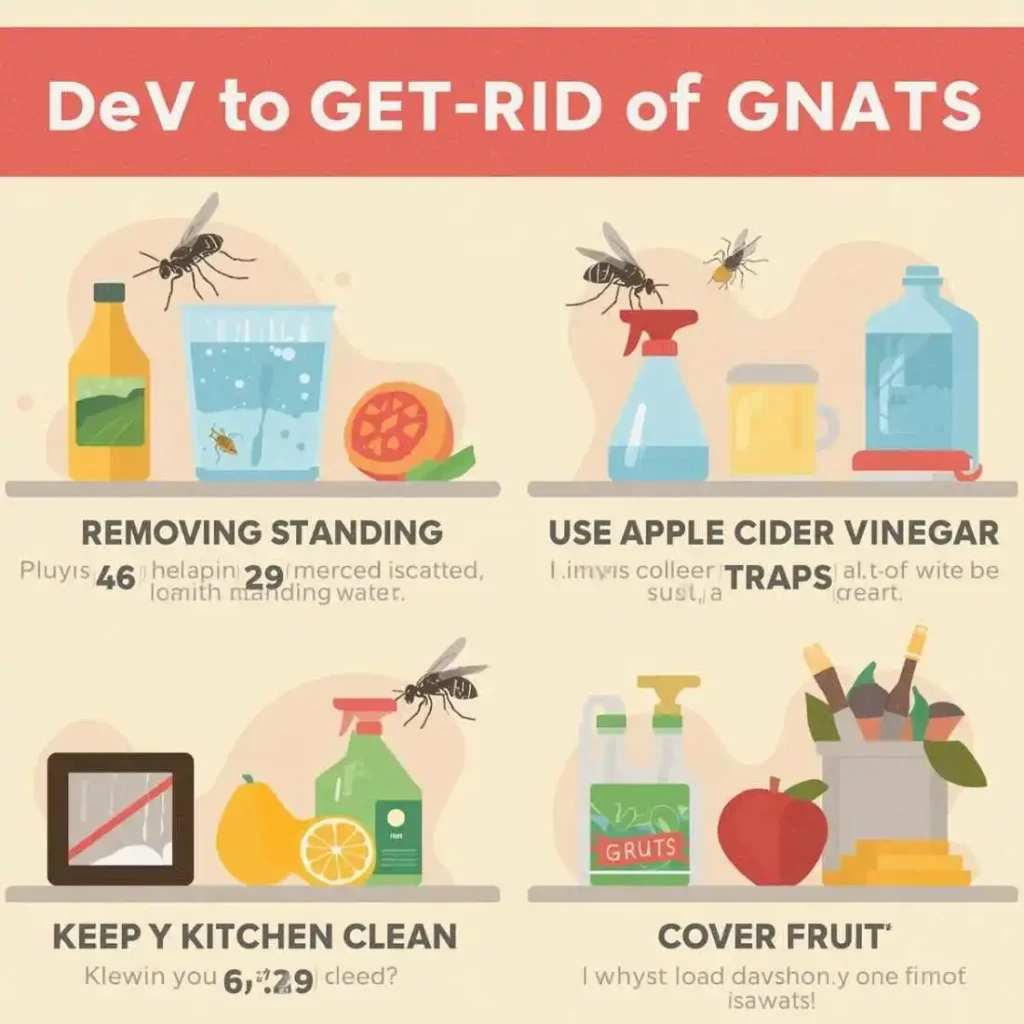
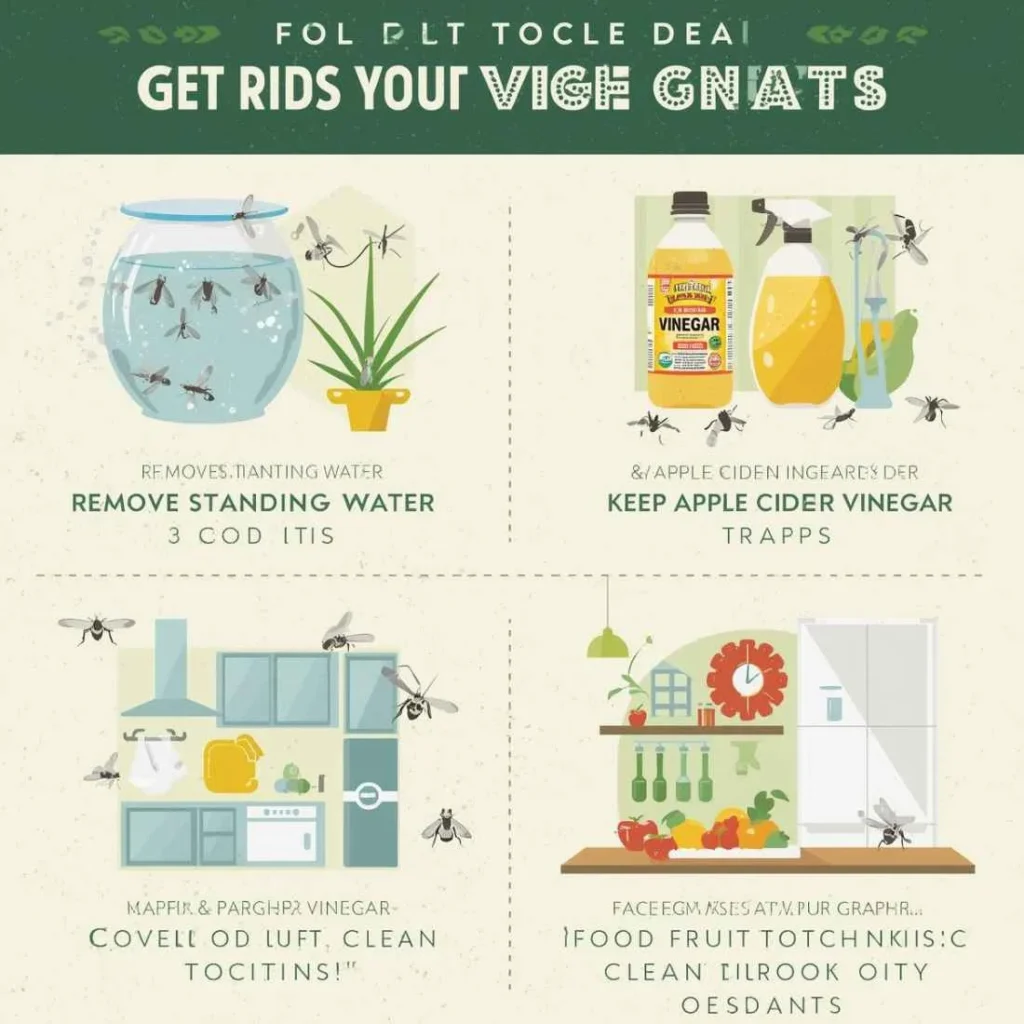
- Drains & Garbage: Clean drains with baking soda and vinegar. Empty trash bins frequently and rinse recycling containers.
Pro Tip: Avoid leaving pet water bowls, open compost bins, or damp towels unattended—they’re perfect breeding sites for gnats.
Step 2: DIY Gnat Traps
DIY traps are safe, effective, and inexpensive.
1. Apple Cider Vinegar Trap
- Fill a small jar with 1/4 cup apple cider vinegar.
- Add 2-3 drops of dish soap to break the surface tension.
- Cover with plastic wrap and poke 5–6 small holes.
- Place near infested areas; gnats enter and drown.
2. Wine or Beer Trap
- Pour a small amount of wine or beer in a container.
- Cover loosely with plastic wrap and poke holes.
- Effective for adult gnats and fruit flies.
3. Sticky Traps
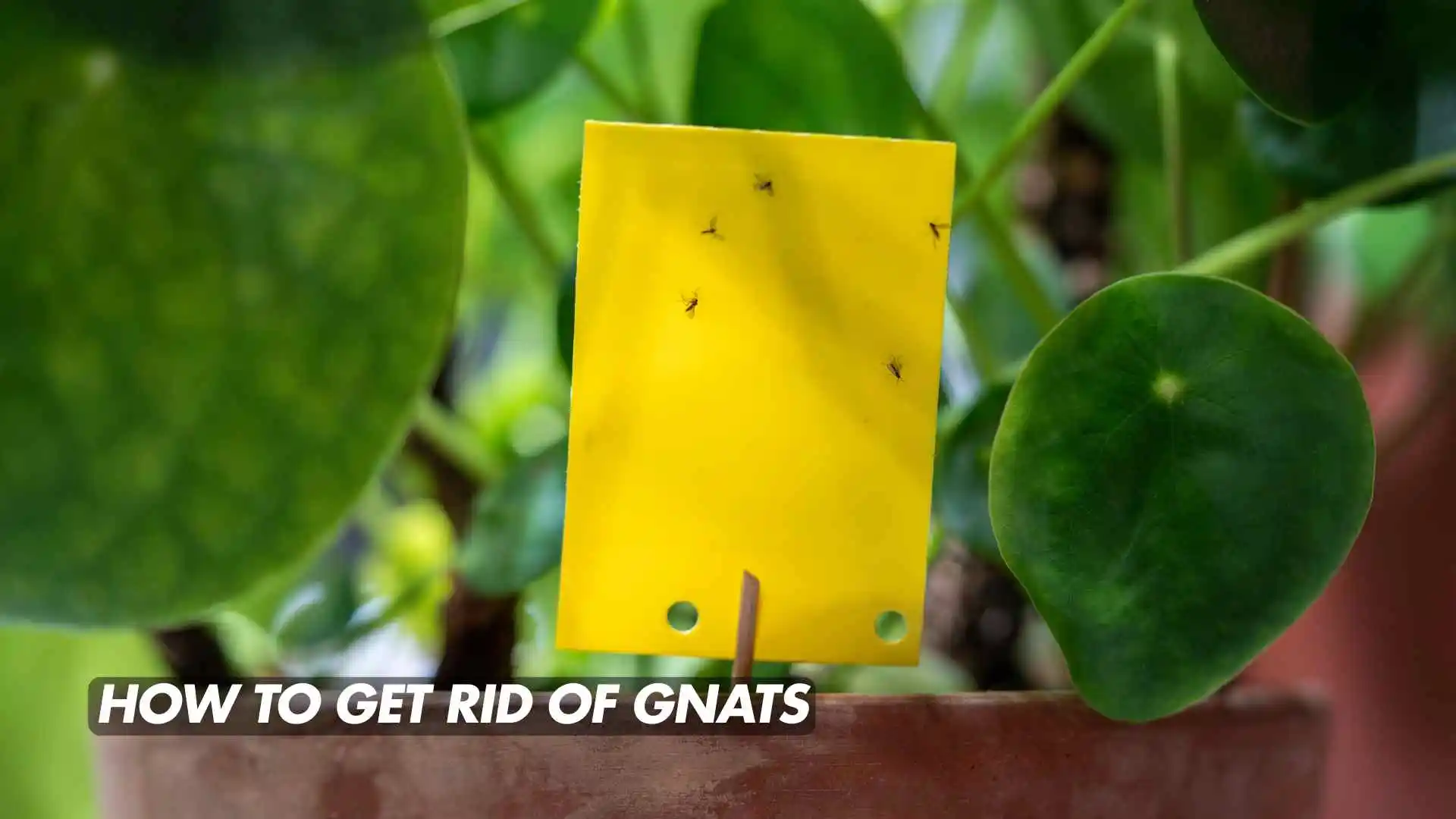
- Yellow sticky traps can catch adult gnats near plants, windows, and trash areas.
- Replace regularly to maintain efficiency.
Example: A reader successfully eliminated a fruit fly infestation in her kitchen within a week using 2 apple cider vinegar traps and regular trash cleaning.
Step 3: Soil and Plant Treatments
For fungus gnats removal around houseplants:
- Allow the top 1–2 inches of soil to dry before watering.
- Sprinkle diatomaceous earth or sand on top of the soil to prevent larvae from surfacing.
- Introduce beneficial nematodes into plant soil to naturally attack gnat larvae.
Visual Suggestion: Include a photo showing topsoil with diatomaceous earth sprinkled and a labeled plant trap.
Step 4: Chemical Treatments
If DIY methods fail:
- Insecticidal Soaps: Safe for plants; kills larvae and adults.
- Neem Oil Spray: Works on soil and plant surfaces to eliminate larvae.
- Aerosol Insecticides: Effective against adult gnats; use carefully and ventilate rooms.
Use only as a last resort, and follow all safety guidelines. Chemical treatments are a faster method for gnat control but should complement preventive measures.
Step 5: Prevention Strategies
Prevention is key for long-term results:
- Avoid overwatering plants; allow soil to dry.
- Store fruits and vegetables properly.
- Clean drains weekly and prevent stagnant water accumulation.
- Seal windows, doors, and entry points to prevent outdoor gnat intrusion.
CTA: Consider keeping a “gnat prevention kit” with vinegar traps, sticky traps, and neem oil ready for quick action.
Step 6: Outdoor Gnat Control
Gnats outside can also invade homes. Steps include:
- Remove standing water in garden pots, bird baths, and gutters.
- Cover compost piles and dispose of decaying vegetation.
- Plant gnat-repelling plants such as lavender, marigolds, or basil.
- Set outdoor traps with apple cider vinegar near patios and garden areas.
Example: A gardener reduced outdoor gnat swarms by 80% in 2 weeks by implementing outdoor traps and planting lavender around her deck.
Step 7: Natural Gnat Repellents
Natural repellents provide an eco-friendly option:
- Essential Oils: Peppermint, eucalyptus, or citronella oils repel gnats. Mix 10–15 drops in water and spray around infested areas.
- Herbs: Indoor basil, lavender, or mint plants naturally repel gnats.
- Garlic Spray: Crush garlic cloves in water and spray near plants.
These methods are ideal for home remedies for gnats without harming pets or children.
Step 8: When to Call a Professional
Call pest control if:
- Infestation spreads across multiple rooms.
- DIY methods do not reduce populations.
- You notice unusual gnats or plant damage.
Professionals can apply targeted treatments for gnat control and ensure long-term solutions.
Common Mistakes to Avoid
- Overwatering houseplants.
- Leaving food uncovered.
- Neglecting drain cleaning.
- Using traps incorrectly or inconsistently.
Avoiding these errors ensures your indoor gnat solutions are effective and lasting.
Bonus Tips for Maximum Effectiveness
- Use multiple traps simultaneously for faster results.
- Rotate DIY traps weekly to prevent gnat adaptation.
- Regularly monitor houseplants and kitchen areas to catch infestations early.
Final Thoughts
Gnats are small but persistent pests. By identifying the type, removing breeding grounds, using traps, applying natural or chemical solutions, and practicing preventive measures, you can successfully get rid of gnats. Combining indoor and outdoor strategies ensures a long-term solution.
Remember: persistence and consistency are key. Implement these methods today, and enjoy a gnat-free home and garden.