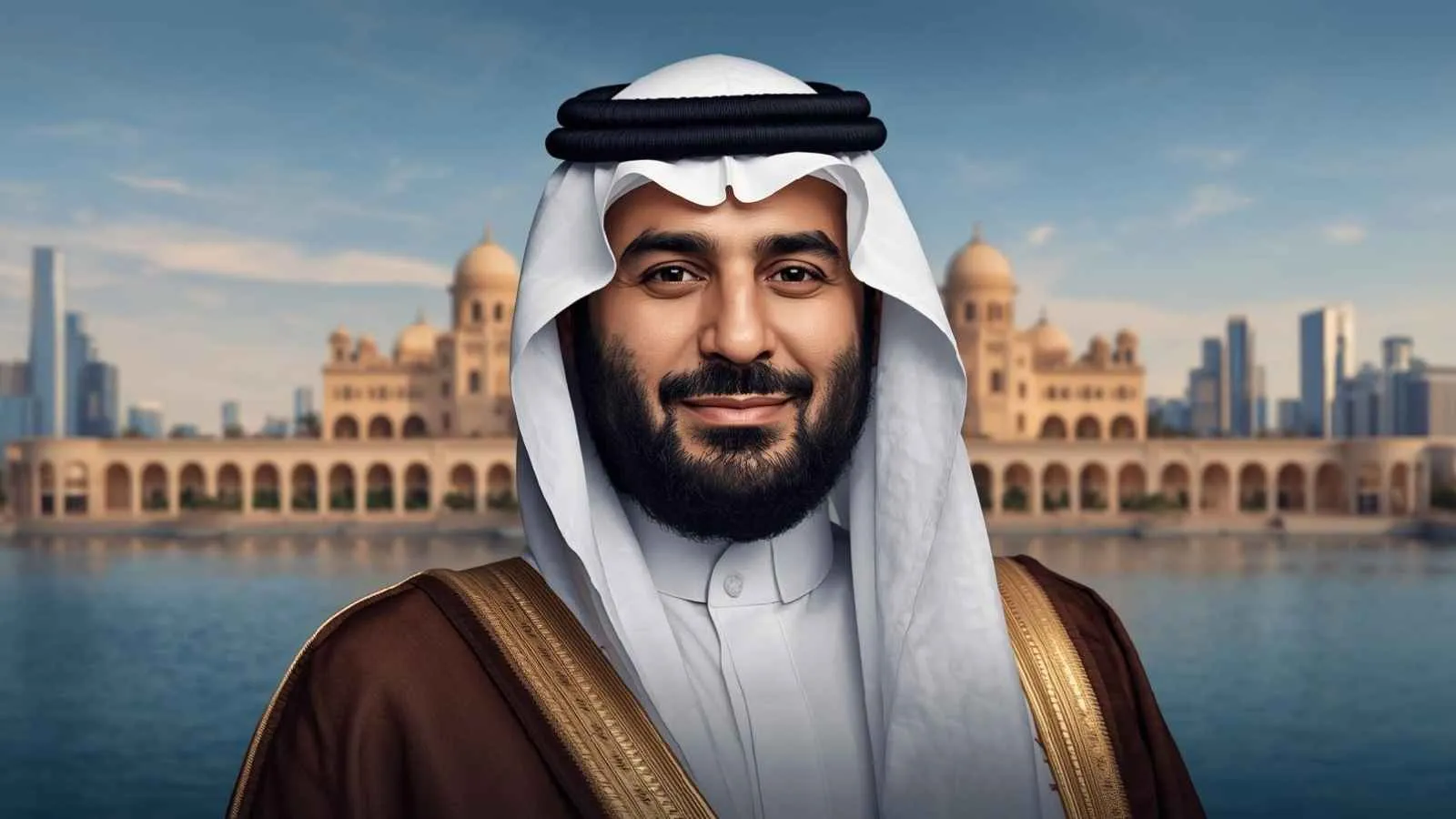
Mohammed bin Salman, commonly known as MBS, is one of the most powerful and controversial figures in the modern world. As the Crown Prince of Saudi Arabia and the country’s de facto ruler, he oversees a nation whose wealth is deeply tied to oil, sovereign investments, and royal privilege. This extraordinary concentration of power has fueled global curiosity about Mohammed bin Salman’s net worth, with estimates ranging from a few billion dollars to claims that place him among the richest individuals on earth.
However, calculating MBS’s true net worth is far more complex than estimating the wealth of traditional billionaires. The lines between personal wealth, royal family assets, and state-controlled funds are often blurred in Saudi Arabia’s absolute monarchy. This article takes an in-depth look at Mohammed bin Salman’s wealth by examining verified sources, major assets, and common misconceptions—while clearly distinguishing between money he personally owns and capital he controls through political authority.
Who Is Mohammed bin Salman?
Mohammed bin Salman Al Saud was born on August 31, 1985, into the powerful House of Saud, the ruling royal family of Saudi Arabia. He is the son of King Salman bin Abdulaziz Al Saud, which positioned him from an early age within the inner circle of the kingdom’s political elite. Unlike many senior royals educated abroad, Mohammed bin Salman earned his law degree from King Saud University in Riyadh, a background that kept him closely tied to domestic power structures.
His rapid rise began after King Salman ascended the throne in 2015. Mohammed bin Salman was quickly appointed Minister of Defense, making him one of the youngest defense ministers in the world. Within two years, he was named Crown Prince, replacing his cousin Mohammed bin Nayef in a move that signaled a major shift in Saudi Arabia’s leadership and internal balance of power.
As Crown Prince, MBS consolidated authority across military, economic, and political institutions. He chairs the Council of Economic and Development Affairs and exercises decisive influence over key state entities, including Saudi Aramco and the Public Investment Fund. These roles place him at the center of Saudi Arabia’s financial decision-making, both domestically and internationally.
Mohammed bin Salman is also the architect of Vision 2030, an ambitious reform agenda aimed at reducing Saudi Arabia’s dependence on oil and modernizing its economy. Supporters view him as a transformative reformer, while critics point to authoritarian governance and human rights concerns. Regardless of perspective, his unprecedented concentration of power is central to understanding both his influence and the intense scrutiny surrounding his wealth.
Understanding Wealth in the Saudi Royal Family
To understand Mohammed bin Salman’s net worth, it is essential to first understand how wealth functions within the Saudi royal family. The House of Saud is not a single economic entity but a vast network of thousands of princes and relatives who benefit from the kingdom’s oil-driven economy. Since the discovery of oil in the 1930s, Saudi Arabia’s vast energy revenues have played a central role in enriching both the state and the ruling family.
Members of the royal family historically received government stipends, land grants, and privileged access to business opportunities. Senior royals often controlled key ministries or sectors, allowing them to accumulate private wealth alongside their official roles. Over decades, this system created significant private fortunes, many of which remain opaque due to limited public disclosure.
A crucial distinction in Saudi Arabia is the difference between personal wealth and state wealth. Saudi Aramco, the world’s most valuable oil company, and the kingdom’s foreign reserves are owned by the Saudi state, not by individual royals. However, in an absolute monarchy, political authority grants significant influence over how these assets are managed and deployed. This dynamic often leads to confusion, with outside observers mistakenly attributing state-controlled wealth directly to individual leaders.
In Mohammed bin Salman’s case, his position as Crown Prince gives him extraordinary control over economic institutions, but control does not equal ownership. While he likely possesses substantial personal assets through inheritance and private investments, much of the wealth associated with his name stems from his authority over national resources rather than his private bank accounts. This blurred boundary is a key reason why estimates of his net worth vary so widely.
Major Sources of Mohammed bin Salman’s Wealth
Mohammed bin Salman’s wealth is often discussed in broad and sometimes exaggerated terms, but it can be more accurately understood by examining several distinct sources. The first is inheritance and royal family assets. As the son of King Salman, MBS is believed to have access to significant private wealth accumulated through decades of royal privileges, land holdings, and investments. While exact figures are not public, senior members of the House of Saud traditionally possess personal fortunes in the billions.
Another frequently misunderstood source is Saudi Aramco. Although Mohammed bin Salman plays a central role in overseeing the company’s strategy and partial public listing, he does not personally own Saudi Aramco. The company remains state-owned, with revenues flowing to the Saudi government rather than to individual royals. His influence over Aramco stems from political authority, not private equity.
The Public Investment Fund (PIF) is also commonly cited in discussions of MBS’s wealth. PIF is Saudi Arabia’s sovereign wealth fund, managing hundreds of billions of dollars in assets across global markets, technology firms, infrastructure, and mega-projects. As chairman, Mohammed bin Salman directs its investment strategy, but PIF’s assets belong to the Saudi state, not to him personally.
In addition to these public-facing roles, MBS is believed to hold private investments and assets, including real estate and stakes in private companies. Some high-profile luxury purchases attributed to him suggest access to vast personal resources. However, due to the lack of financial transparency in Saudi Arabia, distinguishing between private holdings and state-backed spending remains difficult. This uncertainty fuels ongoing debate about the true size of Mohammed bin Salman’s personal net worth.
Luxury Assets and High-Profile Purchases
Mohammed bin Salman’s wealth has drawn significant attention due to reports of high-value luxury assets and eye-catching purchases. These acquisitions, often reported by international media, provide rare glimpses into the scale of resources accessible to the Saudi Crown Prince, even though ownership details are not always fully transparent.
One of the most discussed aspects of his wealth is real estate. Mohammed bin Salman is widely reported to own or have access to multiple palaces within Saudi Arabia, reflecting the traditional lifestyle of senior royals. Internationally, reports have linked him to ultra-luxury properties abroad, including a high-profile estate in France. Such properties are often held through shell companies or intermediaries, making precise ownership difficult to verify.
Art and luxury collectibles have also played a role in shaping public perceptions of MBS’s net worth. He has been linked to the purchase of some of the world’s most expensive artworks, transactions that reportedly involved hundreds of millions of dollars. These purchases underscore the scale of capital available to him, regardless of whether funds originated from personal wealth or state-aligned sources.
In addition, Mohammed bin Salman has been associated with luxury yachts, private aircraft, and elite vehicles—assets commonly held by ultra-high-net-worth individuals. While these purchases do not provide a complete picture of his finances, they reinforce the perception of extraordinary wealth.
However, it is important to note that luxury spending alone does not define net worth. In MBS’s case, these assets represent only a small and highly visible fraction of a much more complex financial reality shaped by power, inheritance, and state influence.
Mohammed bin Salman Net Worth Estimates
Estimating Mohammed bin Salman’s net worth is challenging due to the lack of financial transparency and the blurred boundaries between personal wealth and state-controlled resources. Unlike publicly listed billionaires, MBS does not disclose his assets, investments, or liabilities, making any figure an approximation rather than a verified total.
Media outlets and analysts have offered widely varying estimates. Conservative assessments suggest that Mohammed bin Salman’s personal net worth may be in the range of several billion dollars, derived from inheritance, private investments, and luxury assets. These estimates attempt to exclude state-owned enterprises and sovereign funds, focusing only on assets believed to be privately held.
More aggressive claims, often circulated online, place his net worth in the hundreds of billions or even trillions of dollars, arguing that his control over Saudi Arabia’s oil wealth and investment funds effectively makes him the richest individual in the world. However, these claims conflate political authority with ownership. Control over national assets does not equate to personal wealth under standard financial definitions.
The core reason for this disparity lies in Saudi Arabia’s governance structure. As Crown Prince, MBS exercises enormous influence over institutions such as Saudi Aramco and the Public Investment Fund, which together manage vast amounts of capital. While he directs how this money is invested and spent, the assets legally belong to the Saudi state.
As a result, most credible financial analysts distinguish between wealth he owns and wealth he controls. By this measure, Mohammed bin Salman is undoubtedly one of the most powerful economic decision-makers in the world, but his personal net worth—though substantial—remains unknowable with precision. This distinction is critical to understanding why no definitive figure can be reliably confirmed.
Anti-Corruption Crackdown and Its Impact on Wealth
In 2017, Mohammed bin Salman launched a sweeping anti-corruption campaign that significantly reshaped Saudi Arabia’s financial and political landscape. The initiative led to the detention of dozens of princes, senior officials, and business leaders at Riyadh’s Ritz-Carlton hotel. The Saudi government framed the move as a necessary effort to recover misappropriated public funds and address long-standing corruption within the elite.
According to official statements, the crackdown resulted in financial settlements totaling tens of billions of dollars, recovered through cash payments, asset transfers, and relinquished business stakes. While the government claimed these funds were returned to the state, critics argued that the process lacked transparency and due legal procedure. Regardless of interpretation, the campaign marked a major consolidation of power under Mohammed bin Salman.
From a wealth perspective, the crackdown altered how capital was distributed among Saudi elites. Assets that were once controlled by rival princes and influential families were centralized under institutions aligned with the Crown Prince’s authority. This shift did not necessarily increase Mohammed bin Salman’s personal net worth, but it dramatically expanded his influence over financial flows within the kingdom.
The crackdown also sent a clear message about economic control. By curbing independent centers of wealth, MBS strengthened his ability to direct investment strategies, fund large-scale projects, and implement Vision 2030 reforms without internal resistance. However, the episode intensified international scrutiny and raised concerns among investors about political risk and asset security in Saudi Arabia.
In the context of net worth discussions, the anti-corruption campaign underscores a key theme: Mohammed bin Salman’s financial power is rooted less in private ownership and more in centralized authority over national and elite capital.
Vision 2030 and Economic Power
Vision 2030 is the cornerstone of Mohammed bin Salman’s economic agenda and a central factor in discussions about his financial influence. Launched in 2016, the plan aims to reduce Saudi Arabia’s dependence on oil by diversifying the economy into sectors such as technology, tourism, entertainment, and renewable energy. While Vision 2030 is a national strategy, its execution is closely tied to MBS’s personal leadership and control over capital allocation.
Massive funding for Vision 2030 projects flows primarily through state-backed institutions, especially the Public Investment Fund. Mega-projects such as NEOM, the Red Sea Project, and Qiddiya involve investments worth hundreds of billions of dollars. Mohammed bin Salman plays a decisive role in approving these initiatives, determining funding priorities, and attracting foreign partners.
This level of influence has led some observers to equate the scale of these investments with personal wealth. In reality, the capital deployed under Vision 2030 belongs to the Saudi state and is often financed through oil revenues, debt issuance, and international partnerships. However, the authority to direct such vast sums significantly enhances MBS’s economic power and global profile.
Vision 2030 has also expanded Saudi Arabia’s footprint in international markets. Investments in global technology companies, infrastructure, and entertainment ventures have positioned the kingdom as a major player in global finance. For Mohammed bin Salman, this strategy strengthens his image as both a political leader and an economic architect.
Ultimately, Vision 2030 illustrates the distinction between wealth and power. While it does not directly increase Mohammed bin Salman’s personal net worth, it amplifies his ability to shape economic outcomes on a scale few individuals in the world can match.
International Influence and Global Investments
Mohammed bin Salman’s financial influence extends far beyond Saudi Arabia through a broad portfolio of international investments and strategic partnerships. These global activities are primarily executed through the Public Investment Fund, which has become one of the world’s most active sovereign investors under his leadership. Through this vehicle, Saudi Arabia has taken stakes in technology, infrastructure, energy, and consumer-focused industries across multiple continents.
High-profile investments in global technology companies have drawn particular attention, signaling Saudi Arabia’s ambition to diversify away from oil while gaining access to innovation and expertise. The kingdom has also invested heavily in infrastructure and logistics projects, positioning itself as a future hub for global trade and transportation. While Mohammed bin Salman does not personally own these assets, his role in shaping investment strategy gives him significant indirect economic leverage.
Sports and entertainment have emerged as key areas of international engagement. Saudi-backed initiatives in global sports leagues, high-profile events, and cultural ventures are part of a broader effort to enhance the country’s global image and soft power. These investments, often associated with MBS by name, contribute to public perceptions of immense personal wealth, even though they are state-funded.
Internationally, these investment strategies serve both economic and political objectives. They help secure foreign partnerships, attract tourism, and integrate Saudi Arabia into global financial networks. For Mohammed bin Salman, this approach reinforces his standing as a global power broker rather than a conventional investor.
In the context of net worth discussions, global investments further blur the line between personal wealth and state-backed capital. They underscore how Mohammed bin Salman’s influence is best measured not by ownership alone, but by his ability to mobilize and direct capital on a worldwide scale.
Transparency, Secrecy, and Financial Disclosure
One of the primary reasons Mohammed bin Salman’s net worth remains uncertain is the lack of financial transparency within Saudi Arabia’s political and legal system. Unlike leaders in many democratic countries, senior Saudi royals are not required to publish financial disclosures, tax returns, or detailed asset statements. This absence of public reporting makes independent verification of personal wealth extremely difficult.
Saudi Arabia’s governance structure further complicates matters. As an absolute monarchy, the state does not clearly separate royal finances from government finances in the way many Western systems do. Royal assets are often held through private companies, family trusts, or offshore entities, shielding ownership details from public scrutiny. This opacity has led to speculation, inflated estimates, and persistent misinformation surrounding Mohammed bin Salman’s wealth.
For journalists and financial analysts, assessing MBS’s net worth requires reliance on leaked documents, investigative reporting, and indirect evidence such as luxury purchases or property records. While these sources can provide insights, they rarely offer a complete or reliable picture. As a result, most reputable outlets emphasize ranges and caveats rather than definitive figures.
Secrecy also plays a strategic role. Limited disclosure allows Saudi leaders to maintain flexibility in financial decision-making while reducing domestic and international scrutiny. However, it comes at the cost of investor confidence and fuels skepticism among critics who question the concentration of wealth and power.
In the broader discussion of Mohammed bin Salman’s net worth, transparency—or the lack of it—is a defining factor. Without structural reforms requiring financial disclosure, his true personal wealth is likely to remain speculative, reinforcing the need to distinguish carefully between verified facts and assumptions driven by political influence.
Ethical, Political, and Economic Controversies
Discussions of Mohammed bin Salman’s net worth cannot be separated from the ethical, political, and economic controversies surrounding his leadership. As Crown Prince, MBS has positioned himself as a reformer intent on modernizing Saudi Arabia’s economy and society. At the same time, his tenure has been marked by actions that have drawn significant international criticism.
Human rights organizations have raised concerns over political repression, restrictions on dissent, and the treatment of activists and journalists. These issues have shaped global perceptions of Mohammed bin Salman and have, at times, influenced how international audiences interpret his wealth and power. For critics, the concentration of economic resources under his authority raises questions about accountability and governance.
Economically, supporters argue that MBS’s consolidation of power was necessary to implement long-overdue reforms, combat entrenched corruption, and modernize state institutions. Initiatives under Vision 2030, including social liberalization and economic diversification, are often cited as evidence of progress. However, skeptics question whether these reforms can succeed without stronger institutions and transparency.
Internationally, controversies have affected Saudi Arabia’s investment relationships and diplomatic standing. Some investors remain cautious due to perceived political risks, while others continue to engage, attracted by the scale of opportunity and state-backed guarantees.
In the context of net worth debates, these controversies highlight a broader issue: Mohammed bin Salman’s wealth is not just a financial question, but a reflection of how power, capital, and governance intersect in Saudi Arabia. His economic influence is inseparable from the political system that sustains it, making ethical considerations an essential part of any serious analysis.
Comparison With Other Global Leaders
Comparing Mohammed bin Salman’s net worth with that of other global leaders highlights the limitations of traditional wealth rankings. In democratic systems, the personal finances of political leaders are typically distinct from state assets and are often subject to public disclosure. Presidents and prime ministers may be wealthy, but their net worth is usually derived from salaries, business interests, or investments accumulated before or after holding office.
In contrast, Mohammed bin Salman operates within an absolute monarchy where political authority and economic control are closely intertwined. This structure places him in a different category from elected leaders such as U.S. presidents or European heads of government. While some leaders in other monarchies and authoritarian systems also wield significant economic influence, few command resources on the scale available to the Saudi Crown Prince.
Comparisons with private-sector billionaires like Elon Musk or Jeff Bezos are also problematic. These individuals’ net worths are tied to publicly valued companies and can be tracked through stock ownership and market performance. Mohammed bin Salman’s financial power, by contrast, stems largely from his ability to direct state-owned enterprises and sovereign investments rather than from transparent personal equity.
Among Gulf royals, MBS stands out due to the size of Saudi Arabia’s economy and its vast oil reserves. While other regional leaders control substantial sovereign wealth funds, Saudi Arabia’s scale and global reach amplify his influence. This has led to frequent claims that he is the richest leader in the world, even though such labels rely on unconventional definitions of wealth.
Ultimately, comparing Mohammed bin Salman to other global figures underscores a critical distinction: his significance lies less in measurable personal net worth and more in unparalleled control over capital, policy, and economic direction at both national and global levels.
Frequently Asked Questions About Mohammed bin Salman’s Net Worth
What is Mohammed bin Salman’s net worth?
There is no officially confirmed figure for Mohammed bin Salman’s net worth. Credible estimates suggest his personal wealth is likely in the billions, but exact numbers are impossible to verify due to the lack of financial disclosure and transparency in Saudi Arabia.
How rich is Mohammed bin Salman really?
Mohammed bin Salman is extremely wealthy by global standards, but much of the wealth associated with his name reflects control over state assets rather than personal ownership. His true personal fortune remains largely unknown.
Does Mohammed bin Salman personally own Saudi Aramco?
No. Saudi Aramco is owned by the Saudi state. While MBS has significant influence over the company’s strategy and leadership, he does not personally own it.
Is the Public Investment Fund Mohammed bin Salman’s money?
No. The Public Investment Fund is Saudi Arabia’s sovereign wealth fund and belongs to the state. Mohammed bin Salman serves as its chairman and directs its investment strategy, but the assets are not his personal property.
Is Mohammed bin Salman the richest man in the world?
Claims that MBS is the richest man in the world are misleading. These claims typically conflate political control over national wealth with personal net worth, which are not the same.
Why is his net worth so hard to calculate?
The absence of public financial disclosures, the use of private entities to hold assets, and the overlap between royal authority and state resources make accurate calculations impossible.
Final Analysis and Conclusion
Mohammed bin Salman’s net worth is one of the most frequently discussed yet least understood topics in global finance and politics. As Crown Prince of Saudi Arabia, MBS occupies a position where personal wealth, royal privilege, and state power intersect in ways that defy conventional financial measurement. While he is undoubtedly extremely wealthy by any standard, no credible source can determine his exact personal net worth with certainty.
Much of the confusion surrounding Mohammed bin Salman’s wealth stems from the tendency to conflate ownership with control. Institutions such as Saudi Aramco and the Public Investment Fund manage vast sums of money, but they are owned by the Saudi state, not by MBS as a private individual. His authority allows him to direct and influence these resources, yet that power does not translate into a traditional net worth comparable to corporate billionaires.
What sets Mohammed bin Salman apart is not simply how much money he may personally possess, but the scale of economic influence he commands. Through Vision 2030, global investments, and centralized decision-making, he shapes financial outcomes that affect markets, governments, and industries worldwide. This makes him one of the most powerful economic figures of the modern era, regardless of the size of his private fortune.
Ultimately, asking for a single, definitive figure for Mohammed bin Salman’s net worth may miss the broader point. His significance lies less in a number and more in the unprecedented concentration of political authority and financial control he represents. Until greater transparency exists, his true personal wealth will remain a matter of informed estimation rather than verifiable fact.