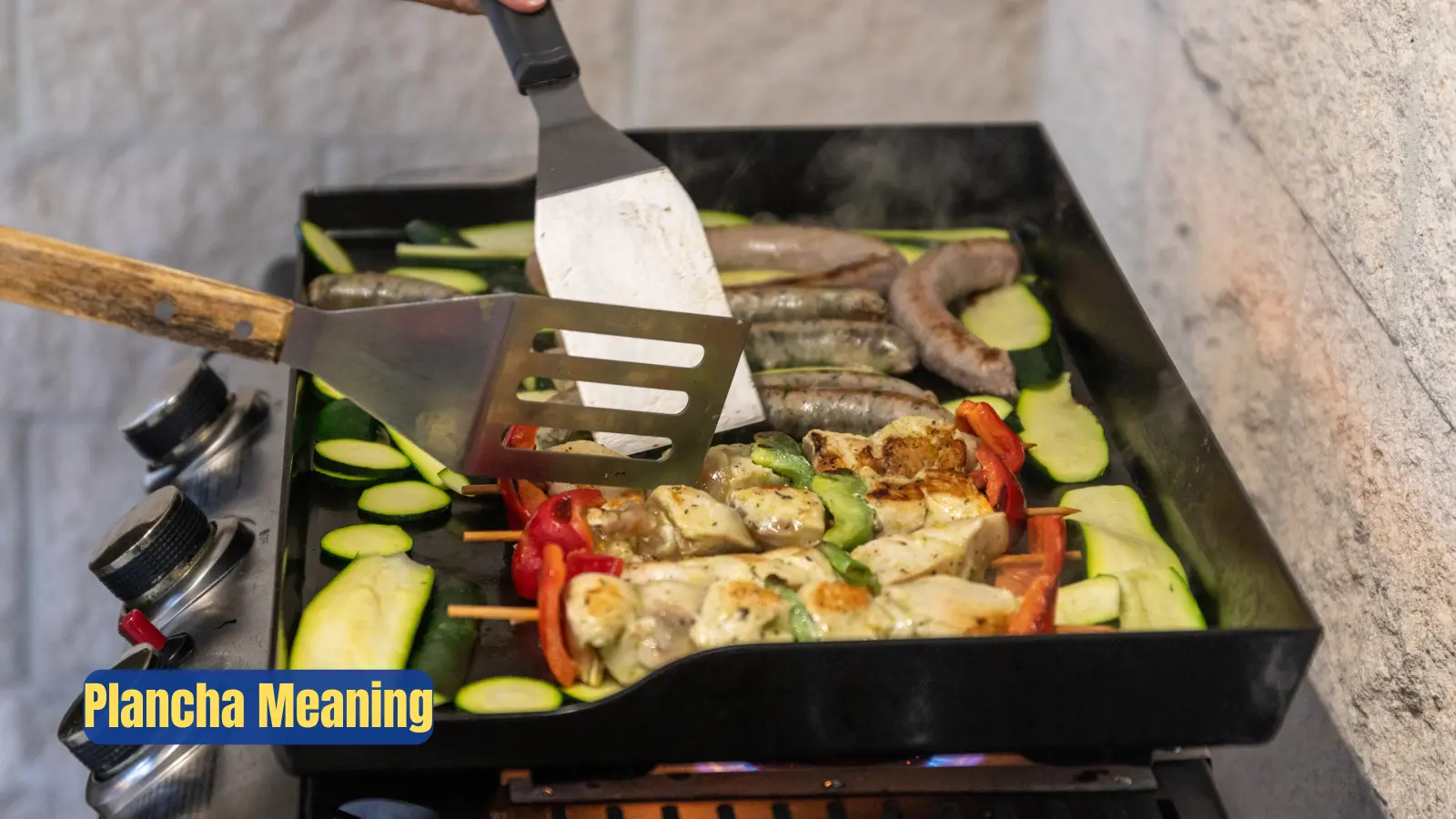
You might have seen the term plancha pop up on menus, in viral cooking videos, or on your feed while scrolling through TikTok or Instagram. It’s suddenly everywhere. But what does plancha really mean? Why is this cooking method—once rooted in Spanish kitchens—now trending in the world of social-media cooking?
In this post you’ll learn the full story behind plancha meaning, how it works, how it differs from a typical grill or griddle, and why it has become so popular in global cooking and content-creation circles.
The Real Meaning of “Plancha” — Linguistic & Cultural Origins
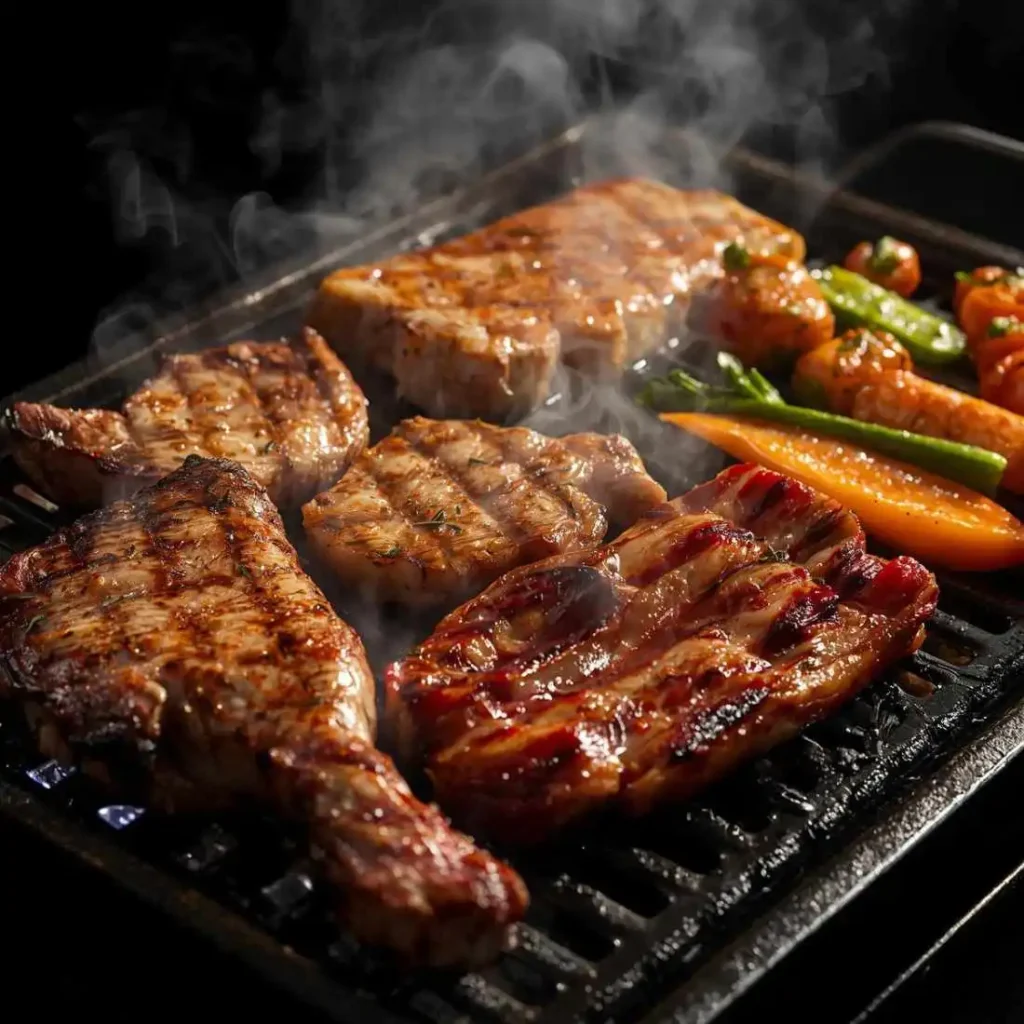
Plancha, in Spanish, literally means “metal plate” or “iron plate.” Historically, it described any flat heated surface—including the household iron used to press clothes.
In culinary terms, a la plancha means food that’s grilled on a hot metal plate. According to the Michelin Guide: “In Spain the word plancha is used to refer to any flat heated surface… In the culinary world the term has come to be associated with a specific collection of characteristics.”
Here’s a quick snapshot:
- Language roots: Spanish “plancha” = plate/iron → adopted into cooking.
- Culture & geography: Spain & Latin America have used “a la plancha” for seafood, meats, vegetables.
- Meaning in cooking: High-heat contact between food and a flat metal surface, with minimal marinade needed, letting natural flavours shine.
What Is Plancha Cooking? (Explained Simply)
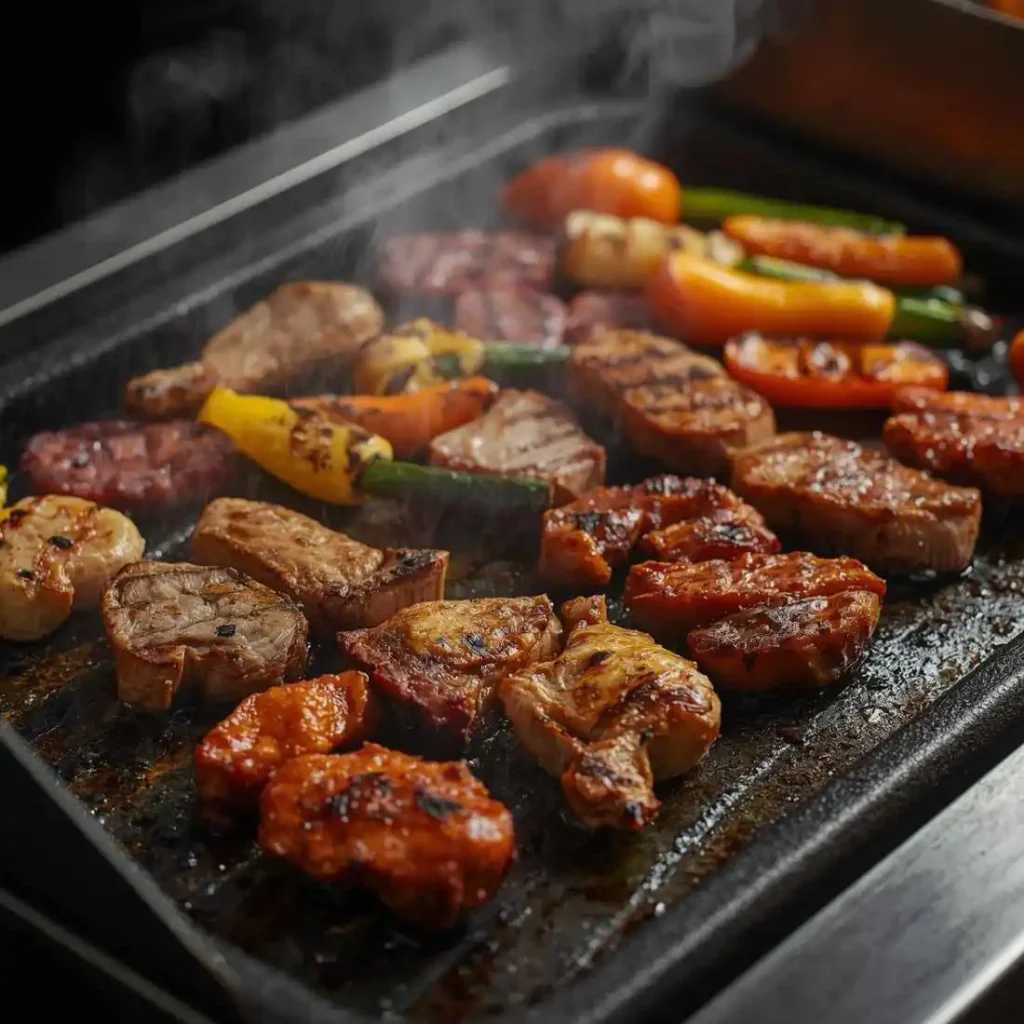
So when we talk about plancha cooking, what exactly are we referring to? In simplest terms: cooking on a flat, metal plate (or integrated flat-top surface) heated to high temperatures. The result: quick sear, caramelised exterior, juicy interior.
Key features of plancha cooking:
- Flat-metal surface: Unlike open-flame grills with grates, the plancha uses a smooth plate.
- High temperature: Often above 450 °F (230 °C) or more for true searing.
- Minimal oil: Often just a drizzle; not deep frying.
- Versatility: Seafood, meats, vegetables, even pancakes or street-food style tacos.
- Health & taste benefit: Because the surface sears quickly, you get that caramelisation without heavy sauces or over-cooking.
An everyday analogy: imagine cooking burgers on a hot skillet, but the skillet is massive, flat, and heated evenly. That’s what plancha feels like—but with better heat control and more dramatic effect.
Plancha vs Grill vs Griddle — What’s the Difference?
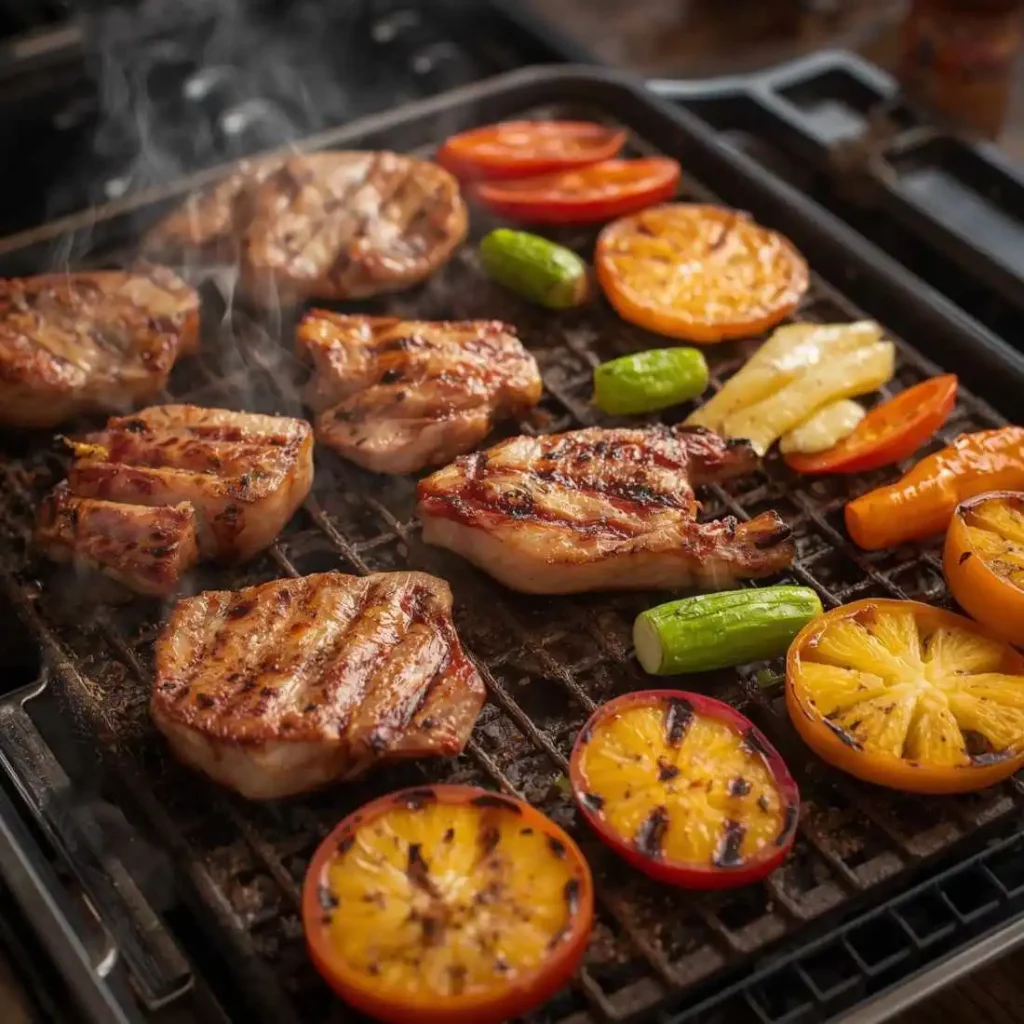
It’s easy to confuse plancha, grill, and griddle. They all cook food using heat, but their surfaces, heat-behaviour and visual/taste results differ. Here’s a comparison table:
| Feature | Plancha | Grill | Griddle |
|---|---|---|---|
| Cooking Surface | Smooth metal plate | Open grate or bars | Flat surface, often non-stick or domed |
| Heat Source / Behaviour | High, direct, evenly distributed under plate | Flame or charcoal under grate, indirect spots | Moderate, even across plate, sensor controlled |
| Ideal For | Seafood, thin meats, tacos, vegetables – for quick sear | Steaks, burgers, ribs – smoky flavour | Breakfast foods, pancakes, bacon, vegetables |
| Smoke & Flare-ups | Minimal – fats drain off surface or to side | High – juices hit flames, flare up | Low to moderate – flat surface, less flare |
| Social Appeal (visual / content) | 🔥🔥🔥 – Sizzle, steam, face value | 🔥 – Classic grill marks, smoke | 🔥🔥 – Smooth flat top, broad visuals |
| Maintenance / Ease | Requires cleaning of plate; grease channels | Requires cleaning grates, dealing with char | Easy to wipe, often non-stick |
| Surface Heat Uniformity | Very high and quite uniform (depending on plate) | Varies – hot spots, cold zones, need flipping | Even but lower max temp than plancha |
Key takeaway: If you want intense sear, minimal smoke, and a flat surface for cooking lots of items at once, go with a plancha. If you’re after char, flame-smoke and classic barbecue vibe, use a grill. A griddle sits somewhere in between, often better for mixed tasks like breakfast or stir-fry.
Types of Planchas: From Backyard Tools to Pro Setups
When you dive into the world of plancha cooking and buying equipment, you’ll encounter different styles based on scale, fuel source and design. Here are the main types:
- Electric plancha: Indoor friendly, great for apartment or kitchen use.
- Gas plancha: Outdoor setups, garden kitchens, backyard barbecues.
- Cast-iron plancha plate: Works on stovetop or grill; heavy, retains heat well.
- Stainless-steel or chrome-plated plancha: Professional-grade, easier cleaning, often in restaurants.
- Built-in commercial plancha: Big flat plates (24-36 inches+), zones of heat for complex cooking.
Pros / Cons Overview
| Type | Pros | Cons |
|---|---|---|
| Electric | Easy indoor use, clean | May not reach highest temps like gas |
| Gas | High heat, outdoor fun | Requires outdoor space, fuel expense |
| Cast Iron Plate | Excellent heat retention, versatile | Heavy, needs seasoning/maintenance |
| Stainless/Chrome Professional | Durable, non-reactive, uniform heat | Expensive, large footprint |
If you’re just starting with plancha cooking, you don’t need the biggest commercial unit. A simple cast-iron or electric flat plate will let you experience the technique—and still participate in trending cooking content.
Foods You Can Cook on a Plancha 🍤🥩🥦
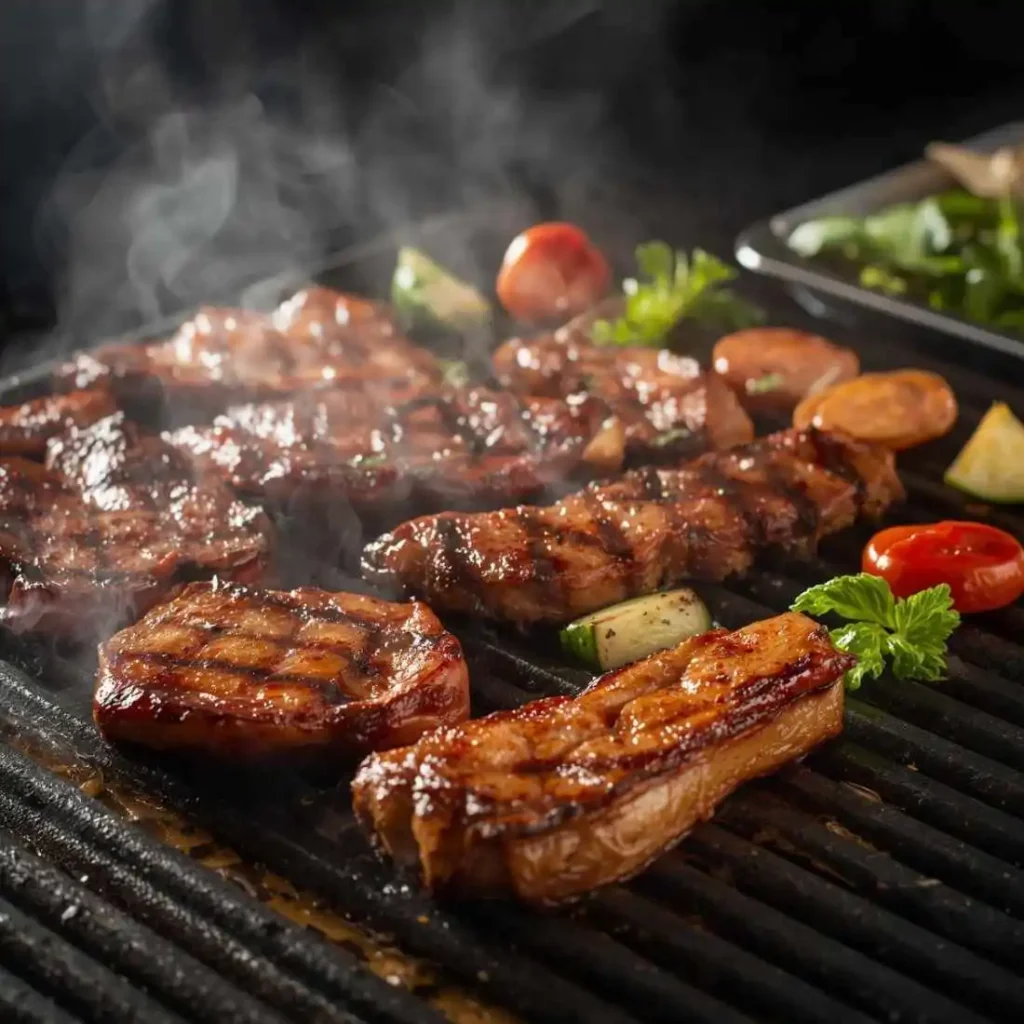
The true power of plancha cooking is its versatility. From seafood to vegetables, you can adapt it today. Here are categories with examples:
Seafood
- Shrimp, scallops, fish fillets (e.g., sea-bass, sea-bream)
- Works especially well because high-heat sears quickly and locks in juices.
Meats
- Steaks (thin to medium thickness), chicken breast, pork belly
- The flat surface ensures full contact and uniform crust.
Vegetables & Plant-based
- Zucchini, peppers, asparagus, mushrooms, onions (especially caramelised onions)
- Can even cook flatbreads, tortillas, smashed burgers.
Breakfast / Street Food
- Pancakes, bacon, eggs, tacos, kebabs
- Perfect for multi-item cooking with visual appeal for content creation.
Unexpected uses
- Toasting buns, melting cheese, finishing off veggies with a citrus drizzle.
- Opportunities for creativity: Think “seafood a la plancha” or “tacos on the flat-top”.
When working across these foods, the plancha technique shines: minimal marinade, maximum flavour, big visual sizzle for your short-form video—ideal for platforms like TikTok.
Plancha Cooking Techniques for Perfect Results
To get the most from your plancha cooking surface, follow these proven techniques:
- Preheat properly
- Heat the plate to a high temperature—often between 400-500 °F (204-260 °C) depending on the model.
- A slower heat-up reduces responsiveness and crisping.
- Oil the food, not the plate
- Use minimal movement
- Place your food items and allow them to sear before flipping. Too much movement disrupts the crust.
- Use zones on the plate
- Deglaze or finish with flavour
- After searing, you can add a splash of wine, lemon juice, or melted butter to the finished food. That little finish adds texture and flavour.
- Clean-up hack
Quick checklist:
- ✅ Preheat plate
- ✅ Oil food items
- ✅ Place food, don’t over-move
- ✅ Use zones if available
- ✅ Add finishing flavour
- ✅ Clean plate while still warm
Applying these methods will give you that luscious crust, minimal smoke, and dramatic cooking visuals—perfect for both your kitchen and your camera.
Plancha Cooking on TikTok and Social Media Trends 📱
Why is the plancha grill trending on TikTok, Instagram Reels and YouTube shorts? Because it’s visually and audibly compelling—and creators know that raw audio of sizzling, steam, and flipping plus dramatic visuals equals engagement.
Here’s how content creators are using it:
- #PlanchaCooking, #PlanchaGrill, #FlatTopGriddle, #GrillTok, #FoodTok appear frequently.
- Viral formats: “10-minute seafood a la plancha”, “smash burger on flat-top”, “veggies on plancha” ASMR.
- Platforms like TikTok and Instagram prioritise short-form video with big visuals and sound design (audio of sizzle = gold).
- Tips for creators: Use natural lighting, capture the raw sizzle, include before/after shots, focus on plating aesthetics.
- Engagement strategies: Ask viewers to guess the temperature, show “what I cooked in 5 minutes”, use affiliate links (e.g., plancha models on Amazon or Walmart) for monetisation.
“Foods cooked on a plancha develop deep, complex flavours in no time and with minimal seasoning.”
From a marketing and branding perspective, plancha cooking hits multiple sweet spots: it’s performance-based, visually dramatic, accessible, and just distinctive enough to feel fresh. Content creators who lean into it gain both niche authority and broad appeal.
Plancha for Home Cooks: How to Get Started
Thinking of bringing the plancha into your kitchen or backyard? Here’s a beginner-friendly guide.
Choosing your first plancha
- Budget-friendly option: A cast-iron griddle plate (fits on stovetop) – good for indoor use.
- Outdoor option: A gas plancha grill unit designed for patio or backyard.
- Size & fuel: Consider how many people you cook for—24-in plate vs smaller. If you have limited space, maybe an electric model.
- Brands & tools: Think of reputable names like Blackstone or Weber for outdoor models; for indoor, high-quality cast iron or stainless steel from trusted cookware makers.
Setting up indoors vs outdoors
- Indoor: Use on stovetop or place plate across two burners. Ensure proper ventilation.
- Outdoor: Ensure stable surface, heat source (gas or charcoal), accessories like spatula, tongs, splash guard.
Safety & temperature control
- Preheat the plancha plate gradually but aim for high heat.
- Use tongs/spatulas rated for high heat.
- Monitor grease — excess pooling increases smoke or possible flare.
- Clean after each use to maintain seasoning or surface coating.
Common Mistakes When Using a Plancha (and How to Avoid Them)
Even seasoned cooks make errors when switching to plancha cooking. Here’s a quick troubleshooting guide:
| Mistake | Problem | Fix |
|---|---|---|
| Overcrowding the surface | Causes steaming rather than searing | Cook in batches or use a larger plate |
| Not preheating properly | Uneven sear or food sticks | Preheat plate until it’s clearly hot |
| Excess oil or marinade | Smoke, flare-ups, soggy surface | Use minimal oil; pat food dry before placing |
| Using wrong zone | Overcooked or under-seared food | Identify hot zone and cooler zone on plate |
| Neglecting cleaning | Food flavour transfer, corrosion | Clean while warm; scrape and wipe each use |
Avoid these pitfalls and you’ll be well on your way to planar cooking success—both in taste and in content-creation value.
Health & Environmental Benefits of Plancha Cooking
Besides flavour and visual appeal, using a plancha offers several health and eco advantages.
- Lower oil usage: Because the plate provides contact searing with minimal fat, meals tend to be lighter.
- Minimal smoke / flavour control: Since fats aren’t dripping into flames (as in many grills), you get less smoke and potentially fewer harmful by-products.
- Efficient energy use: Flat-top surfaces heat rapidly and evenly—less waiting, less wasted energy.
- Versatility means less equipment: One large flat surface can handle many foods at once—reducing need for multiple pans or grills.
For health-conscious cooks or people wanting to shoot content with less mess and less smoke, the plancha is a very smart choice.
Plancha Around the World 🌍
The technique and equipment behind plancha cooking travel far beyond Spain—reflecting global food culture and migration of methods.
Spain: “A la plancha” is a restaurant staple—fish, seafood, meat grilled on metal plate.
Latin America: Street-food vendors in Mexico & coastal areas prepare shellfish, tacos and more on plancha plates.
USA / Global Trend: Backyard cook-ups with flat-top grills, social-media creators using plancha techniques, and restaurants adopting “plancha style” menus.
Japan / Asia: Though not called “plancha,” the concept is similar to teppanyaki/flat-top stations in which food is seared on flat steel plates.
This worldwide spread shows that plancha cooking isn’t just a niche technique—it’s become part of the global vocabulary of flat-surface cooking, blending tradition and modern content trends.
Plancha Tips for Content Creators & Food Bloggers
If you’re creating food content—whether on TikTok, YouTube Shorts, or Instagram Reels—here are smart ways to integrate plancha cooking into your strategy.
- Capture the sizzle: Use a microphone or smartphone close to the plate to pick up sizzling sound—sound design matters.
- Lighting matters: Natural light highlights the textures of seared meat, vegetables, crust.
- Camera angle: A top-down or 45° angle showing entire flat-top surface gives dramatic visual.
- Before/after shots: Place raw item, then reveal finished seared result—good for thumbnails and engagement.
- Hashtags & keywords: Use #PlanchaGrill, #PlanchaCooking, #FlatTopGriddle, #GrillTok, #FoodTok.
- Affiliate marketing: Feature gear (brands like Blackstone, Weber) with links to Amazon, Walmart etc.
- Engagement hook: Ask viewers to comment the food they’d cook on a plancha, or have them guess temperature/time.
- Story-telling: Combine the global history of plancha, the Spanish origin, with your own twist on recipes—makes it more memorable.
By combining the technical appeal of plancha cooking with social content hooks, you can position your content for both niche authority and mass appeal.
Buying Guide: Best Planchas for Every Budget (2025 Edition)
| Type | Recommended Use / Model Example | Approx Price (2025) |
|---|---|---|
| Indoor Electric Plate | Good for apartment or kitchen only use | $60-$100 |
| Outdoor Gas Plancha Grill | Full backyard setup | $150-$300 |
| Cast Iron Plate (Stovetop) | Versatile, cooks indoors/outdoors | $40-$80 |
| Stainless/Chrome Professional Plate | Commercial grade, large scale cooking | $250+ |
When shopping, look for:
- Plate thickness and material (cast iron, steel, chrome).
- Good temperature control and uniform heat.
- Size relative to your cooking needs.
- Accessories like grease channels, spatulas, stands.
- Reviews from social-media users (content creators often test gear for their videos).
Investing in a quality plancha will pay off in cooking results and content creation potential.
Final Thoughts: Why the Plancha Is More Than Just a Grill
The plancha meaning goes far beyond a simple cooking surface. It’s a blend of tradition (Spanish & Latin American cooking), modern technique (flat-top, high-heat searing), and digital culture (viral cooking videos, content creation).
When you light up a plancha plate and hear the sizzle, you’re not just cooking — you’re engaging all senses, crafting a visual and auditory experience. You’re also adopting a method that’s healthier, efficient, and ideal for multi-item cooking.
Whether you’re a home cook, backyard grill-enthusiast, or social media creator, the plancha offers a fresh angle. Try it once — you’ll likely never look at “grill” the same way again.
FAQs About Plancha Cooking
Is a plancha the same as a griddle?
Not exactly. A plancha generally reaches higher temperatures, has more uniform heat across the surface, and is designed specifically for high-temp searing.
What foods are best cooked on a plancha?
Seafood (shrimp, fish fillets), thin meats, vegetables (zucchini, peppers), flatbreads, tacos. Its strength is cooking items quickly with a crisp exterior and juicy interior.
Can I use a plancha indoors?
Yes—electric or stovetop models exist. Just ensure proper ventilation and heat safety.
What’s the ideal temperature for plancha cooking?
Temperatures can exceed 450 °F (230 °C) for searing; traditional setups in Spain heat up to ~350 °C (662 °F).
How do I clean a plancha grill?
While still warm, scrape off food bits, optionally pour a little water/ice cube to loosen debris, wipe with oil. Maintain seasoning if cast-iron; wipe chrome if plated.
Why is plancha cooking trending on TikTok?
Because the visuals of searing on a flat surface, sizzling sounds, quick cooking time, and the ability to show full plates at once all align with short-form video engagement strategies.